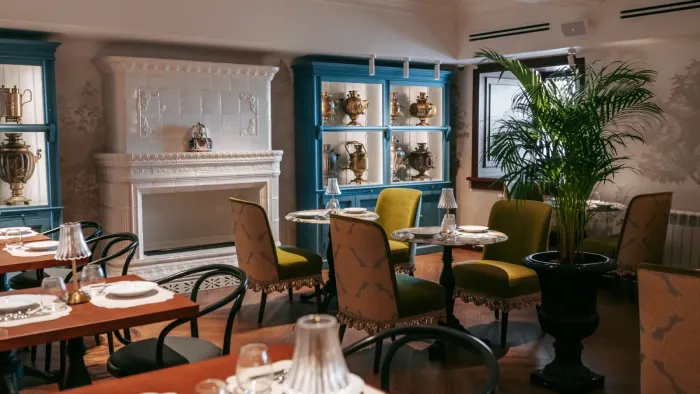
Ak Chynayak in the Kazan Kremlin.
The tea salon combines Tatar traditions, a historical interior, and signature dishes15.08.25
Tea salon "Ak Chynayak" is located on the grounds of the Kazan Kremlin, facing the Kul Sharif Mosque, and occupies a 19th-century cadet school building. The venue's name translates from Tatar as "white porcelain cup" and symbolizes purity, hospitality, and warmth. The space brings together Tatar tea and coffee traditions, letting visitors touch history while sensing a modern take on national rituals. The cup at "Ak Chynayak" becomes a symbol of connection between generations, and the project creates a new point of contact with Tatar culture, continuing the traditions laid down by the Fine Group team in its other projects, such as restaurant "Chirem" and coffee shop "Aulak."

The concept is built on the era of Jadidism at the turn of the 19th and 20th centuries, when educational reforms and a cultural awakening made tea part of the working day for the urban Tatar intelligentsia. Designers from studio Krivtsova & Redina, together with artists, craftspeople, and historians, split the space into two rooms — a tea shop and a salon. The tea shop recreates the atmosphere of late-19th-century Kazan stores, with original artifacts, including a National Cash Register cash register with a Russian alphabet, antique tin boxes from confectionery factories, and a collection of goods from Kazan merchants. The salon reflects the décor of early-20th-century Kazan merchant homes, with hand-painted ceiling ornaments, checkerboard floors, carved cabinets, a stove, a textile chandelier, vintage samovars, and a piano with sheet music and books. Every detail is recreated from archival materials and private collections, creating the effect of standing inside a historical space.

The tea list from head bartender Danil Bezrukov reveals the depth of Tatar traditions, spanning the era of the Great Silk Road and its pu-erhs, oolongs, red, smoked, and palace teas, through to the period of the Kazan Khanate, when envoys were greeted with blends of green and black tea with herbs — fireweed, oregano, nettle. Teas from the bai (wealthy-landowner) period preserve the flavors of black tea with mint, thyme, currant, and rosehip, while village tea gatherings come with homemade baking, honey, jam, and dried berries. Jadidism is represented by a separate tea series inspired by the range once offered by the Savin and Shmelev Trading House. Coffee lovers can look forward to Crimean "men's" and "women's" drinks, differing in strength and spice aroma.
Chef Lenar Khurmatullin's menu continues the dialogue with history. Kystyby, manty, broths, baked goods, and sweets are made to traditional recipes using local ingredients and a modern presentation, restoring the dishes' historical meaning. Tableware made by hand or in collaboration with the Gzhel porcelain factory, along with plates and souvenirs bearing national patterns by Naila Kumysnikova, forms the venue's unique visual code.

The interior details were made by hand, echoing mosque patterns, Tatar Art Nouveau carving, national ornaments, and embroidery elements. The staff uniform was recreated from costumes of the late 19th and early 20th centuries, and the venue's logo combines the Russian language with Arabic elements and Tatar ornament. The space doesn't just immerse you in history — it explores culture, linking past and present. The tea salon's playlist reflects the voices of Kazan across different eras. A collection of 18 antique 17th–19th-century samovars tells the story of the craft, while an Underwood No. 3 typewriter from 1913 and a late-19th-century music box bring back the physical presence of time, letting visitors feel a connection to the past.
15.08.2025