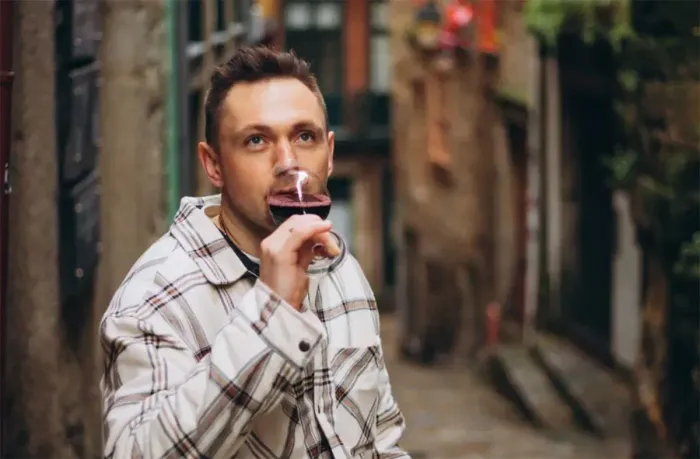
Evgeny Tsyganov, Brand Chef of Folk Team
We talked to Zhenya about his plans, trends, challenges, and whether he still enjoys working in the kitchen14.10.24
How will this fall be different from previous ones?
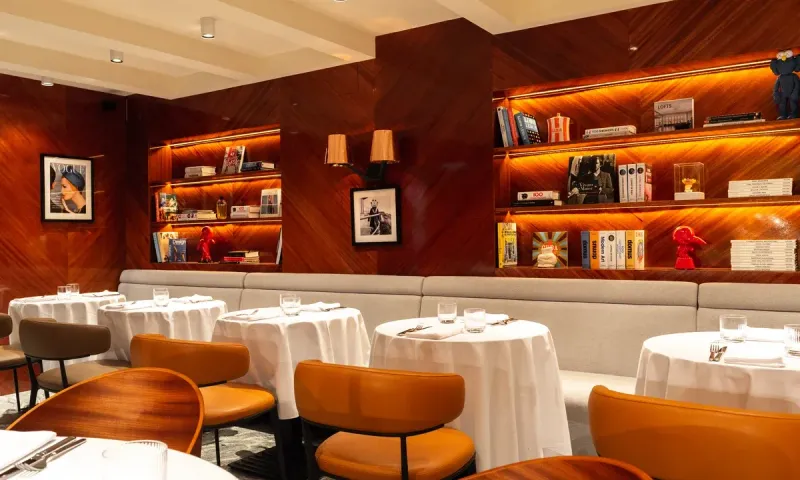
It'll definitely be a busy continuation of what's already been a busy restaurant year. The moment when there was some fear and a pause in business growth is behind us, and restaurateurs keep opening a huge number of projects with new, interesting concepts — including our own Folk Team's Spanish restaurant Padron. I like that so many unique concepts are appearing — that's clearly tied to the fact that we've developed a certain boldness, and the restaurant market has formed a matching demand; people have become interested in experiments of various kinds.
Folk Team, which you work with as brand chef, is exactly about experiments, isn't it?
Yeah, I like that the guys (Veniamin Ivanov and Dmitry Romanov, founders of the Folk Team restaurant group) don't build projects within already-existing trends — they come up with their own concepts. There's a certain degree of risk in that approach, of course, but overall, when it comes to growing the team and the restaurants in general, this path is entirely positive, because we're always in a state of doing something innovative. On one hand it's hard, since projects like that always get examined under a magnifying glass, but then you realize you're becoming part of a movement that sets trends.
What does it take for a whole trend to grow out of one project?
What matters here is symbiosis — you have to clearly understand what you're creating, steep yourself in the spirit of that culinary concept or direction, and then show that your restaurant is full. That's the foundation. That's how Italian restaurants appeared, in their time — at first nobody needed them, then they filled up, and now, I think, Moscow has seven hundred fifty thousand Italian restaurants. I'm sure a Spanish trend will follow Padron too — it's inevitable. And a lot of the credit for that goes to Adrián Quetglas, our concept chef, who regularly comes from Spain with his vision of the national cuisine, and to Dima and Veniamin, who are keen on us bringing traditional Spanish dishes into our menu.

Name some trends in Moscow lately that you think are overrated?
A hundred percent, it's Italy. That subject has been so thoroughly covered, and has so little ground left for further development, that literally anyone can consider their Italian concept the best and most correct one. Or the worst one for me — Mediterranean cuisine, where it's completely unclear what people are even doing. I'd rather talk about underrated ones. I'm sure there's huge potential in Russian cuisine, in Japan and the Asian direction generally, and the France subject hasn't been explored yet either.
What's the main news you're heading into the season with?
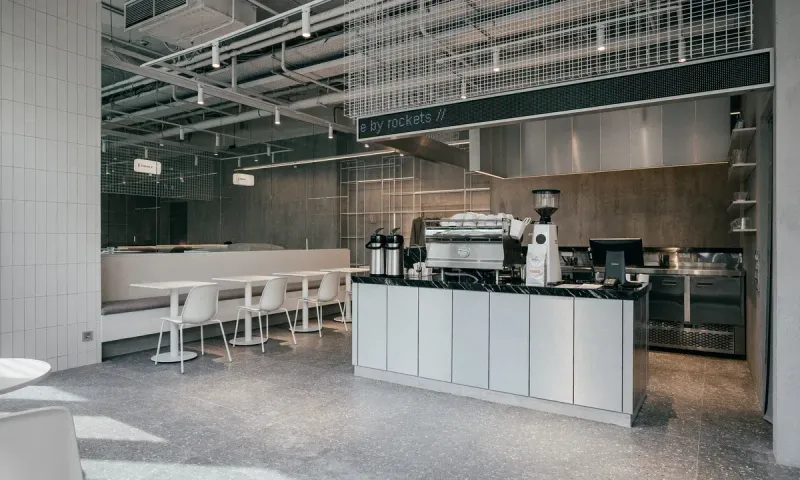
We've finally reformatted the second floor of ENO Bistro in Skolkovo and are opening the season with a new kitchen concept. This project matters a lot to me, and I wanted to show my culinary philosophy here. "Foraging. Hunting. Farming" is the name of the menu and the guiding idea behind this culinary development. We've gathered a lot of interesting ingredients to showcase that development, and we're preparing a series of dinners with present-day foragers, hunters, and farmers, who turned out to be incredibly passionate, interesting people. This Saturday, October 12, we're having a dinner with foragers who'll bring dandelion capers, dried rhubarb, and smoked wild pear. And if the weather allows, after dinner we'll sit by the fire outside and drink forest-herb tea.
In October, Folk Team is holding a Russian wine festival timed to the premiere of the series "Zemlya Vinodelov" ("Land of Winemakers"). It's the first project all five of the group's restaurants take part in, including Anchovy's Club, created together with the Dreamteam team. So right now I'm deeply immersed in the wine subject and getting ready for dinners with the best domestic winemakers, who'll be coming to visit us: on October 22, Konstantin Dzitoev brings his wines to Folk; on October 24, Franck Dusseneix from Château de Taillou comes to Padron; and on October 31, ENO Bistro hosts Usadba Divnomorskoye.
We remember, not so long ago, times when restaurants would open for a two-year run. In your view, what's the active lifespan of a good place today?
Building restaurants is expensive now. Besides that, the whole approach to setting the average check is different than in past years. So the minimum operating span for a restaurant should be seven years or more, since the payback period alone can reach three to three and a half years, and everyone would still like to make money on top of that, investors especially, of course. So now's the time to play the long game.

And what are the biggest challenges along that path?
The biggest challenge today is the staffing shortage. And you can only deal with it if you decide to be as interesting as possible on the market in terms of the product you create. Then people will gravitate toward you, wanting to watch and learn something new from you — there's no way around it. If you're teaching your cooks, investing your knowledge and experience, then they're willing to work with you. Some time back, the industry seemed to lose its way, and people just chased money, but now chefs have come back to restaurants with the awareness that they want to learn and grow.
Do you still enjoy working in the kitchen yourself?
I recently caught myself thinking that I need motivation to spend time with my family (laughs). I always want to try something new, come up with something. We recently introduced something that I hope becomes a Sunday tradition — Asador por favor at Padron. I go to the market myself in the morning, buy something interesting, and cook for four hours, from 2pm to 6pm. For me it's a time to talk with guests, see what they like, hear their feedback. So imagining myself on the couch on a Sunday is genuinely hard for me. That's why I recently set up a little studio at home — my daughter and I are going to film our own show (laughs).
14.10.2024
The best places in the city