17 Best Coffee Shops in Moscow — Where to Drink Coffee in the Capital
The Taste editorial team selected 17 of the best coffee shops in Moscow — from specialty bars to patisseries with signature desserts.30.07.24
There are hundreds of good coffee shops in Moscow, but we picked seventeen worth coming back to. This roundup features the best coffee shops in Moscow with vetted beans, interesting food, and an atmosphere that doesn't lean on trends. Specialty bars with their own roasting, quiet patisseries, beautiful coffee shops in central Moscow with panoramic windows — the formats vary, but the quality is equally high across the board. We visited every place in person.
Tverskoy Boulevard, 3
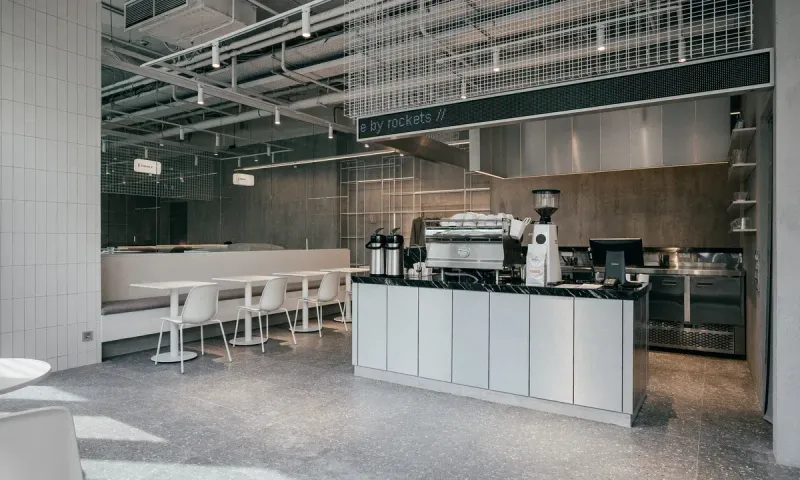
A project by Egor Neveykin that has grown far beyond an ordinary coffee shop. On Tverskoy Boulevard sits a multi-format concept store, where a coffee-brewing area, a retail bean shop, and a training center all coexist under one roof. The visual language is Spanish urbanism: ergonomics come first, decor follows function. Wide windows let in maximum daylight.
The beans are roasted in-house — the range includes more than thirty varieties, available loose, in drip bags, and in Nespresso capsules. Coffee recipes go from straight espresso to signature creations. Pairings for the drink: Italian focaccia, laminated brioche, a rotation of seasonal pastries. A wine shelf and cocktail list run alongside it all.
The training center runs cuppings, seminars on aroma profiles, and hands-on classes on extraction methods. Beans and accessories are sold on-site; orders are also available remotely through the website. Rockets treats coffee as a discipline that demands study — and passes that attitude on to every guest.
Bolshaya Polyanka, 51A/9
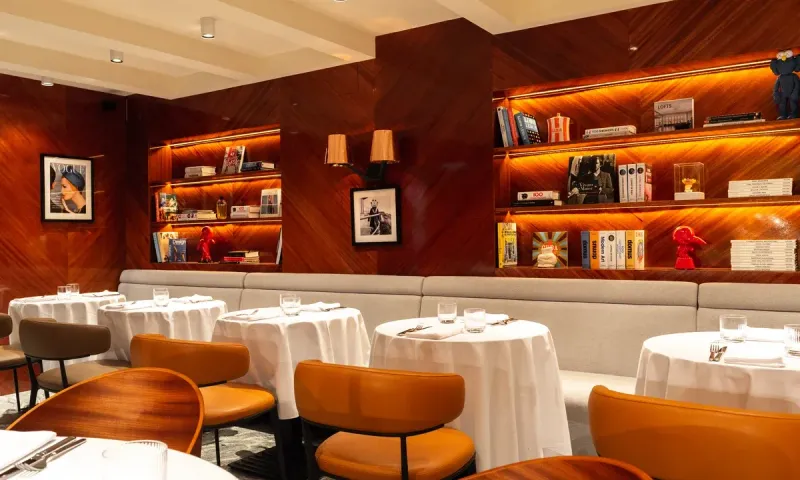
This project's concept is built on the collision of three metropolises: Moscow's architecture outside the window, New York energy inside, and Sydney calm as the connecting note. The architects managed to combine the contrasts so the space feels cohesive — wood paneling, diffused light, a sense of nearby water that isn't actually there.
The food side follows the same hybrid principle: quinoa porridge with shredded coconut, a corn bowl with pumpkin and avocado, crunchy honey-and-nut granola, thick pancakes topped with a cloud of cream. The presentation blends American generosity with Australian lightness. In summer, a terrace with a city view is open.
Besides the daily menu, The Waterfront runs interactive morning events: tastings, talks on roasting and brewing methods. Delivery, private-event room rental, and a loyalty program for regulars — the infrastructure of a full-fledged restaurant project, packaged as a coffee shop.
A tiny patisserie that recreates the rhythm of a Parisian neighborhood right in the center of Moscow. The smell of buttercream and fresh pastry greets you before you're even through the door. Inside — two rooms: the first with compact round tables for tea, the second given over to the display case and takeaway pickup.
The main specialty is hand-assembled tartlets, but the range runs much wider: laminated croissants, rich muffins, multi-layer cakes, fruit confitures, canapés, homemade cookies, ice cream. Even the smallest pastry here is styled like a miniature — as much attention goes into that as into flavor. Drinks: fresh coffee, Mariage Frères tea, citrus lemonade, fresh-pressed juices.
The staff work unobtrusively and fast. Larger formats — a cake or an oversized tartlet — are made to order with a day's notice; free delivery within a nearby radius, a fixed fee beyond that. Capsules and loose-leaf tea are also for sale. A beautiful coffee shop in Moscow worth making a special trip for — for desserts you won't find anywhere else.
One of the chain's 38 locations, each individually designed. Arcus is done in a Scandinavian key: solid wood, natural shades of beige and gray, a glazed section of roof letting in overhead light. The room's centerpiece is an enclosed spiral staircase leading to the second level. In the evening, soft side lighting comes on, and the room takes on the tone of a country house.
Behind the quality is vertical integration: an in-house roastery, a bakery, a pastry section, meat and sausage workshops, a pasta and pelmeni line. The morning menu starts at five, the daytime one includes soups, hot and cold starters, salads, pasta, burgers, and sides of grains and seasonal vegetables. There's a separate kids' menu. Drinks range from smoothies and lemonades to herbal infusions.
By the register, the display case holds bags of house-roasted beans, capsules, filter drip bags, and loose-leaf premium tea. Kofemania long ago outgrew the coffee-shop format and now runs as a full-cycle restaurant, without losing its intimacy.
The interior recreates Northern Europe: strict proportions, spherical light fixtures, potted greenery on the shelves, dominant beige. The accent wall is a stylized panorama of a mountain range on an ultramarine background; lighting brings the image to life in the evening. In snowy weather, the windows turn the Moscow street into a Scandinavian landscape.
The kitchen's format is a simple but well-thought-out morning table: thin crêpes filled with turkey and mozzarella, homemade-recipe syrniki with berry jam, crispy ciabatta with salmon or chicken, sweet rolls with nut caramel and cinnamon, laminated tubes with condensed milk.
Most of the drinks menu is original: coffee with cream, mandarin juice and nutmeg; a caramel-banana latte; cappuccino with currant purée and pine extract; ginger tea with sea buckthorn; vanilla hot chocolate. MonteView is about a calm, quiet morning with no unnecessary noise.
A specialty chain brand that, in a short time, grew from a single Moscow location into an international project with coffee shops in the Emirates. The space at Patriarch's Ponds blends Scandinavian and Korean aesthetics: open lighting, a natural palette, a natural-stone counter, deep armchairs by the window openings. In the cold season, the view of the snow-dusted pond adds a value all its own.
An in-house roastery runs the beans, never stopping its experiments with profiles. In the cup: batch brew, trinity, straight espresso. Breakfast and lunch cover the standard range: porridge, grain bowls, sandwiches with seasonal fillings, crispy croissants, green salads. The signature desserts deserve a special mention — nut cookies and a dark-chocolate muffin.
What sets the Patriarch's Ponds location apart is its unusual neighbor: a bookstore and a lecture space share the site. An experiment that started as a one-off has stuck around and become part of the identity. A place to drink coffee in Moscow with no rush — and walk out with a new book under your arm.
A compact café built into the walls of the legendary cinema "Khudozhestvenny," whose history dates back to November 11, 1909 — hence the number in the name. The format is hybrid: a spot for a hearty breakfast in the morning, a quick bite during the day, a bar with a wine list in the evening.
The room is long and narrow, the ceiling low and vaulted. The bar counter runs along the left wall, a row of tables sits on the right, and in the back is a soft sofa zone where films play. Wall-length mirrors, handmade ceramics, and light oak paneling neutralize the sense of tightness — there turns out to be an unexpectedly large amount of light.
The morning menu: oatmeal with pear and berries, curd casserole with baked quince, millet porridge with pumpkin, an omelet with a choice of toppings. Later, bagels, sandwiches, a fish salad, and meat starters appear. Desserts: laminated croissants, fruit pie, icy sorbets. Coffee is made with regular or plant-based milk; the wine list is compact but well-chosen.
A café hidden in the inner courtyard of a residential quarter near Novoslobodskaya. You can't see it from the sidewalk — and that's part of the design: the quiet starts before you even arrive. The concept is to become part of a guest's everyday route, a place you drop into in the morning for coffee and stay until dinner.
The walls are lined with carved wood paneling, the room holds a series of original installations, and the central dessert case sits on a marble pedestal. The light is mostly natural, coming through a floor-to-ceiling glass façade.
The kitchen rests on a concept of home cooking with a chef's touch: toast with avocado flesh, salsa, and salted lemon, Italian cacio e pepe pasta with Kampot pepper, a range of salads with unusual dressings. The secret to repeat visits is the signature sauces that transform familiar dishes beyond recognition. The dessert case is a particular point of pride: complex textures, muted sweetness. Beans come from Rockets Roasters, espresso is made on single-origin Ethiopian beans, alternative brews on Colombian and Kenyan beans.
A refectory on the grounds of the Church of the Holy Martyr Antipas of Pergamum, in a service building that took shape over six centuries. The restoration preserved the stone walls and arched window openings, while the interior got a modern reading: whitewashed surfaces, an abundance of pendant lamps, and a complete absence of wall decor.
The furniture is entirely wood. The bar counter is faced with a mosaic panel in the spirit of Byzantine motifs; matching inlays are set into every table. The tables are modular: normally they stand apart, but for shared meals, lectures, or meetings with the abbot they're pushed together into a long line, and the scattered patterns come together into a single hidden inscription.
The food menu is ascetic — morning porridge, fresh pastries, hot coffee. Antipa doesn't exist for the menu: it's a space for conversation and quiet, where a coffee break feels closer to meditation than a snack. A place for those looking for something more than a drink in a coffee shop.
The brand traces back to 2009. For a long time, the project stayed strictly a patisserie — and it was the desserts that made its name. The principle hasn't changed: every item is shaped and decorated by hand, using fresh flowers, delicate meringue, caramel threads, seasonal berries. The result is closer to jewelry-making than assembly-line pastry work.
The main hit is the "Napoleon," with a custard-based vanilla cream and thin layers of crispy pastry. The rest of the case doesn't fall behind: multi-tier cakes, elaborately constructed pastries, chocolate candies. After 2018, hot food appeared: grain bowls, fresh salads, signature sandwiches, full lunch items. Coffee is made from beans of a proprietary roast profile; alongside — matcha, cocoa, leaf tea, seasonal lemonades.
The atmosphere is warm, with floral accents in the decor and soft background lighting. Kalabasa is a patisserie that grew into a full-fledged coffee shop while keeping its dessert-driven character as the load-bearing structure.
Your Coffee Place occupies a quiet corner at Chistye Prudy. The format is an urban coffee shop with an extended kitchen and a welcoming policy toward dog-owning guests. The interior style is moderate Scandi: light wood, simple geometry, diffused overhead light. The beans are the Submarine brand, brewing consistent.
The kitchen goes beyond the standard coffee-shop range: rice with kimchi, poke with raw salmon, avocado toast, banana-nut bread, buttery croissants. Portions are sized for a full breakfast or lunch, prices within reason.
The work infrastructure is in order: outlets at every table, fast Wi-Fi, background music at a reasonable volume. The coffee shop doesn't build its concept around an idea — it builds it around consistency: every visit delivers the expected result, and it's exactly that predictability that keeps regulars coming back.
Visually, the boldest coffee shop in the city. The name nods to the future, the interior to the cyberpunk genre: raw concrete, steel structures, strips of neon light ranging from blue to pink. A dark palette with pinpoint bursts of color turns the room into a frame from a sci-fi film.
For all the visual provocation, the coffee program is serious: the beans go through a proprietary roast, and the menu has latte, cappuccino, filter coffee, and a rotation of signature seasonal recipes. The kitchen is limited to a compact set of light breakfasts and desserts — just enough to accompany the drink.
2046 works off a mismatch of expectations: the shell shouts about the future, while what's in the cup brings you back to the artisanal standards of the present. People come here for a morning espresso and for evening photos in the neon glow alike.
The project is named after Erna Knutsen, the American specialist who, in the 1970s, coined the term "specialty coffee" and thereby changed the industry. The scale of the space is intimate: white walls, shelves holding a minimum of objects, a glass display case as the only visual accent.
The signature item is choux pastries with fillings ranging from classic vanilla to limited seasonal versions. Alongside — pastries, cookies, a compact line of confections. The coffee is made from high-grade beans, the presentation free of theatrics: cup, saucer, dessert.
Erna works equally well as a takeaway patisserie and as a spot for a quick stop. No rituals, no show, no unnecessary words — just a quality product. For an audience that understands specialty coffee and doesn't need it explained.
One of the Moscow locations of a chain built around a surfer aesthetic. The address: the ground floor of the historic Firsanova Income House, within walking distance of Kuznetsky Most. Inside — natural materials, decorative surfboards on the walls, the relaxed atmosphere characteristic of the whole brand.
The beans get an in-house roast, and the cup holds espresso and filter coffee in basic and extended recipes. The kitchen focuses on a morning and daytime menu: hot sandwiches, light pastries, a few items for a full breakfast. Remote workers and freelancers have long claimed Surf Coffee as their own — it's calm, there's internet, and no pressure to order more.
With no claims to culinary revelations, the coffee shop maintains a consistent level of drinks and service from visit to visit. A good option for those who value predictability and an unobtrusive setting.
An international chain with locations in Moscow, Kazakhstan, and the United Arab Emirates. The core offer is specialty-grade coffee, fast service, and end-to-end digitization: orders are placed through a mobile app, and the drink is picked up with no wait in line.
The beans go through centralized control at every stage — from purchasing to roasting. Besides the classic coffee items, the menu includes matcha, cocoa, and seasonal special recipes. The food is light and fast: filled croissants, sandwiches, portioned desserts. The interior is functional: a neutral palette, comfortable seating, clean forms with no decorative noise.
Drinkit bets on consistency — every location in the chain delivers the same result. For guests who value their time and steady quality without needing to learn a new place with every visit.
A specialty bar with an emphasis on neighborhood identity. Bike parking out front, a warm welcome for four-legged guests inside. The space is bright, with no excess styling: everything is subordinated to comfort rather than visual effect.
Beans are selected for a specific roast profile; the menu has espresso, filter, and alternative brewing methods. The kitchen offers morning bowls, toast with toppings, seasonal pastries, and homemade lemonades. Portions are honest, and the menu is updated regularly.
Salyut plays the role of a neighborhood gathering spot: people grab coffee to go in the morning, stay for lunch by noon, and drop by on the way home in the evening. Not a loud concept or a trendy address — just a coffee shop that became a habit. And a habit, as we know, is the highest form of loyalty.
The owners spent several years in the German capital, absorbed Berlin's coffee culture, and decided to recreate it in Moscow. The result: concrete surfaces, solid wood, industrial glass, an abundance of daylight, and a quiet hush as part of the setting.
The morning menu is concise but balanced: oatmeal with hazelnut praline, homemade syrniki, crunchy granola, an omelet with soft goat cheese. The beans are bought from partner roasters, preparation careful — no unnecessary flourishes or decoration.
Natural light sets the rhythm of the place: it changes over the course of the day, and the atmosphere shifts with it — from focused work energy in the morning to relaxed dimness closer to evening. A coffee shop for situations that call for quiet: a long breakfast, a few hours behind a laptop, a hushed conversation. A Berlin standard, adapted to Moscow coordinates.
30.07.2024
The best places in the city