The Best Places for Dinner in Moscow
Moscow restaurants for a memorable dinner: Japanese omakase, steaks, pasta, meze, Russian cuisine, cocktails, wine, and spots for an evening with friends or loved ones.08.08.26
Breakfast is usually called the most important meal, but we're ready to argue: nothing beats a dinner shared with friends or loved ones.
The best places for dinner in Moscow aren't one format or one cuisine. In this city you can spend an evening over Japanese omakase, a steak from a dry-aged cabinet, Greek meze, handmade pasta, Russian delicacies, or cocktails after tacos. It's not just about the level of the kitchen: a good dinner rests on the lighting, the seating, the wine list, the service, and the chance to talk at the table without being rushed. We've put together 20 restaurants for dinner in Moscow — from intimate addresses by the sushi bar to big projects with open kitchens, terraces, wood ovens, and bars. Some places are worth booking for a date, others call for a group and dishes ordered for the middle of the table. There's one shared criterion: the evening should be delicious, cohesive, and the kind you want to come back to.
B. Nikitskaya, 24/1s6
Jun is the place to choose when you want to turn dinner into a focused Japanese ritual. Brand chef Artemy Lopatin, who worked in Tokyo under Sugita, at Nobu Matsuhisa in London, and at Sushi Nakazawa in New York, builds the kitchen around omakase and clean product. At the sushi bar the guest sets the frame with their preferences, and the set is then assembled from the best catch of the day. Chutoro, sea bass, squid, seasonal nigiri — what matters here isn't sauces or theatrical gestures but the precision of the rice, the temperature of the fish, and the calm confidence of a team that doesn't rush the evening and lets the product speak first.
Solyanka, 1/2s1
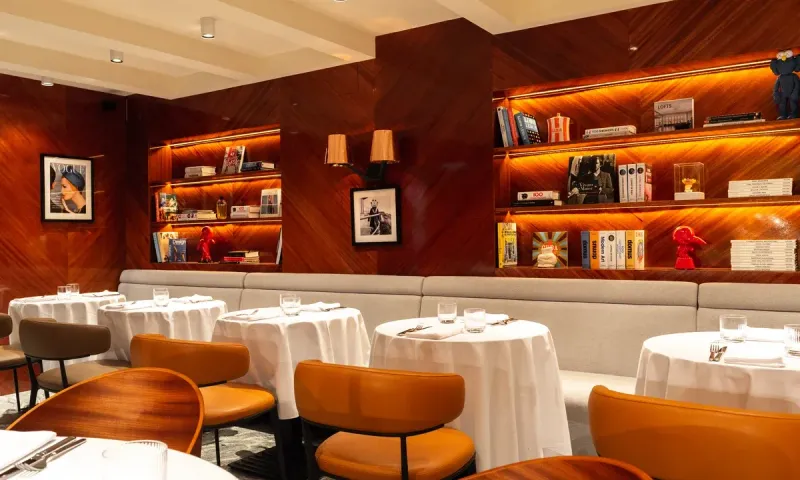
Carniceria Vino hides beneath the Masa Madre bakery, but inside you quickly forget you're in a basement: three rooms, a wine cellar, a dry-aging chamber, house-made salami, a marble counter by the open kitchen, and the heat of the ovens all pull the evening toward meat. Roman Palkin, who trained under Francis Mallmann, works with fire without theatrics: steaks, jamón, sausages, and a Latin American nerve all rest on the product. This is a dinner restaurant where wine isn't an addition but the other half of the conversation, especially if you order dishes for the middle of the table and move from starters to the grill.
Patriki is a small 28-seat room with large windows looking onto Malaya Bronnaya. Irina Glik's design rests on olive, grey, and beige tones, lit reeds, and a mirror echoing the silhouette of the pavilion by the pond. In the evening the restaurant becomes almost a closed jewel box: the city stays behind the glass, while inside the open kitchen and menu carefully shift familiar dishes toward an author's version. A good address for dinner at Patriarshiye when you want intimacy without pretension, but with the feeling that every table here was placed on purpose.
Folk has already become a Moscow classic of new ethnic cuisine. Dmitry Romanov and Veniamin Ivanov brought together the Caucasus and Central Asia not as a set of tourist quotes but as a living restaurant language: matsoni flatbreads, lahmajun, shashlik, spices, herbs, and a wood-fired oven work in a contemporary way without losing a recognisable taste. In the evening the open flame and the energy of the large room are especially felt. This is where people come for dinner with a group: order several dishes for the table, argue about the sauces, and inevitably take one more flatbread while new orders keep leaving the oven.
Salone pasta&bar builds its Italian dinner on handmade pasta and precise work with the product. The Moscow restaurant inherited the spirit of the St. Petersburg Salone but became more spacious: brand chef Evgeny Engelke and chef Denis Lukyanenko roll dough for tagliatelle, maltagliati, and ravioli every day, drawing on Emilia-Romagna. Pappardelle with San Daniele prosciutto and gorgonzola, caramelle with crab, Roman-style pizza, and the wine list make the place equally suited to a date and to a long dinner with friends, when pasta and a glass of wine become the whole plan for the evening.
Eva in Khamovniki sounds quieter and more grown-up than the original Eva. Glen Ballis keeps the Greek foundation, while chef Bakhtiyar Shamsiev puts the emphasis on fire, the grill, souvlaki, and hot dishes that open up best in the evening. There's less noise here and more room for conversation: meze, fish, meat off the open flame, and familiar Greek flavours that need no extra explaining. The interior again evokes a southern villa, but the restaurant runs calmer — a place for a dinner that doesn't need to be rushed and can be stretched over several courses.
Sage combines Vladimir Perelman's restaurant experience with the St. Petersburg gastronomic school of Dmitry Blinov. The kitchen is run by Dmitry Golenin, one of Moscow's strongest chefs when it comes to vegetables and root vegetables: baked cabbage with truffle, tartare with smoked parmesan, seasonal produce from the farm — here taste is built not by the number of ingredients but by precision. Dinner at Sage can be a business meeting, a personal evening, or a night with friends, but in every case the restaurant holds a high bar without showing off complexity, paying attention instead to every sauce, root vegetable, and side.
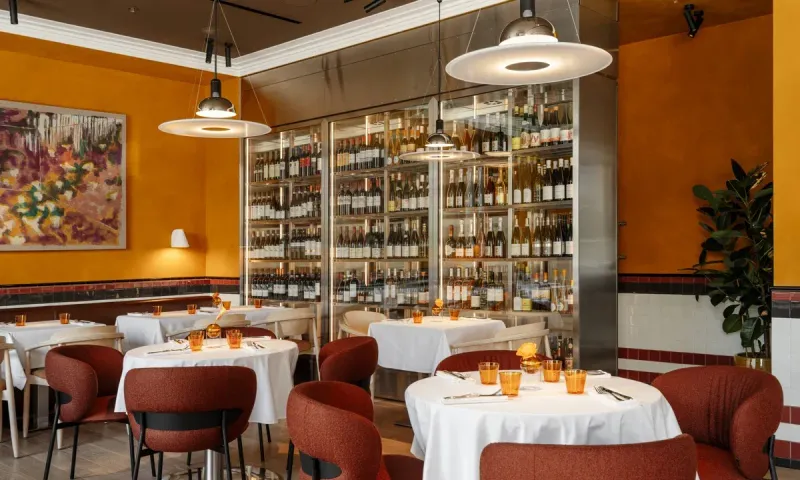
Lui sits next to GES-2 and comes into its own in the evening, when soft light appears along the embankment. Evgenia Uzhegova designed the room as a Mediterranean villa: beams, natural materials, plants, white tablecloths, candles, and murals with olive trees. The kitchen looks toward Italy, France, Spain, and Greece, so dinner is easy to build around a mood: pasta, fish, meat, wine, dishes for the middle of the table. At sunset the terrace is almost a separate reason to book, especially if you want to start dinner before dark and stay on into candlelight.
Joli Grand Bistrot in Moscow took over the scale of the former Mamontov brothers' factory: two levels, an arched window, ceilings nearly twelve metres high, murals inspired by Henri Rousseau, GIEN faience, and textiles in the spirit of William Morris. At the entrance there's a pâtisserie and a flower shop; inside, a French bistro without museum-like formality. Dinner is built around straightforward food: tartares, salads, pasta, fish, meat, and bold sauces. A good fit for an evening when you want beauty without formal protocol — a living French mood at a big table.
Eva on Bolshaya Gruzinskaya remains Glen Ballis's personal Greek project: the name is tied to the chef's daughter, and the kitchen to his family's home cooking tradition. The menu holds around forty items: meze, dips, a wood-fired oven, the grill, octopus with tomato and tahini, beets with feta cream, halloumi with honey and truffle oil, a Greek salad with dense, salty feta. In the evening the restaurant sounds most convincing of all: a bright room, greenery, fruit in the details, and food that's natural to share around the table and mop up with bread.
Sangre Fresca at Patriarshiye is the choice when you want to step away from a predictable dinner. Marco Antonio Ferreira runs the kitchen, while the bar is led by the team of Artem Peruk, Nikolai Kiselev, and Igor Zernov from El Copitas Bar. The Mexican cuisine here is adapted for a Moscow evening but doesn't lose its edge: tacos, sauces, corn, meat, seafood, and cocktails all hold the same nerve. The space is split into zones, so you can start with dinner and finish the evening in bar mode without changing address or mood, while keeping the focus on the food.
Padron, from the Folk Team, brings Madrid, Lisbon, and Barcelona all at once to Strastnoy Boulevard. Dmitry Romanov and Veniamin Ivanov set two worlds side by side: an Iberian restaurant and a speakeasy bar through a separate entrance. Brick, cast iron, ceramics, street lamps, and azulejo tiles set a southern tone, while concept chef Adrián Quetglas handles the meat, fire, and Iberian foundation. This is a place for dinner where the steak, seafood, wine, and the bar after the main room all come together into one evening, without having to choose between the restaurant and the bar.
Beluga sits on the second floor of the National Hotel and remains one of Moscow's leading Russian restaurants. What matters here is the view of Red Square, caviar in dozens of forms, Far Eastern scallop, sea urchin, Arctic halibut, rare cuts of meat, and a contemporary approach to Russian product. Chef Roman Chistov combines old Russian recipe motifs with current techniques without turning the kitchen into folklore. Dinner at Beluga is an occasion for guests of the city, an important meeting, or an evening when you want Russian cuisine without compromise.
Due Forni on Bolshoy Savvinsky Pereulok holds two Italian moods at once: a restaurant with an author's kitchen and an Osteria with looser seating, a bar, and seafood. The interior doesn't argue with the neighbourhood: restrained, respectable, but alive. The menu suits a long dinner — pasta, fish, meat, oven dishes, and a wine list where European classics sit alongside less obvious choices. An address for those who want an Italian evening without decorative fuss, with a proper conversation at the table and a pause to choose the next bottle.
Ikura builds its dinner on wabi-sabi aesthetics and izakaya nikkei cuisine — the Japanese-Peruvian crossover where fish, fire, citrus, sauces, and precise work with texture all matter. Natalya Belonogova's interior is assembled from wood, stone, Japanese plaster, ikebana, and weathered surfaces; at the centre of the room is an open kitchen with a robata grill, and beyond the windows, Trubnaya Square. The lighting and the view make the evening almost cinematic, but the kitchen remains the main argument: ceviche, rolls, hot dishes, and careful service that doesn't compete with either the view or the open kitchen.
Uchiwa draws on the Japanese story of the samurai fan and the sea battle between the Taira and Minamoto clans, but doesn't turn dinner into a lecture. The theme reads in the details: the furniture, handmade tableware, knives, cutting boards, staff uniforms, and the motif of the heikegani crab. The room is strict, composed, and alive, without excess decoration. The kitchen keeps its focus on Japanese product, clean flavour, and visual discipline. A restaurant for an evening when you want not just sushi but a complete Japanese mood and attention to every detail on the table.
Ayu looks like a gastronomic theatre in several acts. The team brought a counter of white hinoki cypress from Japan, along with tableware, knives, kimonos, and even a refrigerated cabinet they waited around two years for. The name refers to the silvery ayu fish, with its rare aroma of cucumber and watermelon, and the whole logic of the menu is built around that same purity of product. Dinner here unfolds at the counter: the chef, the rice, the fish, the pacing of the courses, and the service all work as one system. An address for those who value Japanese cuisine in its most concentrated form.
Rebecca in Khamovniki is a bistro by Svetlana Drobot and brand chef Grigory Chunikhin, familiar from Linbistro and Ester. The space sits between a French brasserie and Scandinavian minimalism: panoramic windows, grey tones, light wood, vintage armchairs, rounded sofas, an open kitchen, and a bakery behind glass. What matters for dinner is exactly this calm, almost domestic architecture of the evening: bread, wine, straightforward dishes, soft light, and the feeling of a neighbourhood where the restaurant becomes a familiar meeting place — and a reason to make the trip to Khamovniki on purpose.
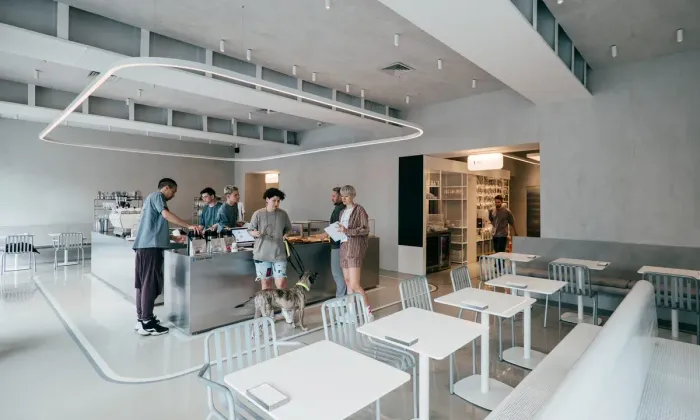
Remy Kitchen Bakery in ZILart works as an easy everyday restaurant, but with a serious team behind it. Aleksey Penyuk of Studio APAA built a space with high ceilings, panoramic windows, Scandinavian details, and furniture by Fritz Hansen, Charlotte Perriand, and Zanotta, while the open kitchen in stainless steel sets an honest, working tone. Ruslan Polyakov handles the main menu, Anna Malikova the bread and pastry, Ilya Zamogilin-Sudzilovsky the desserts, and Vitaly Skripchinsky the cocktails. Dinner here is easy to start with bread and finish with dessert without a change of pace.
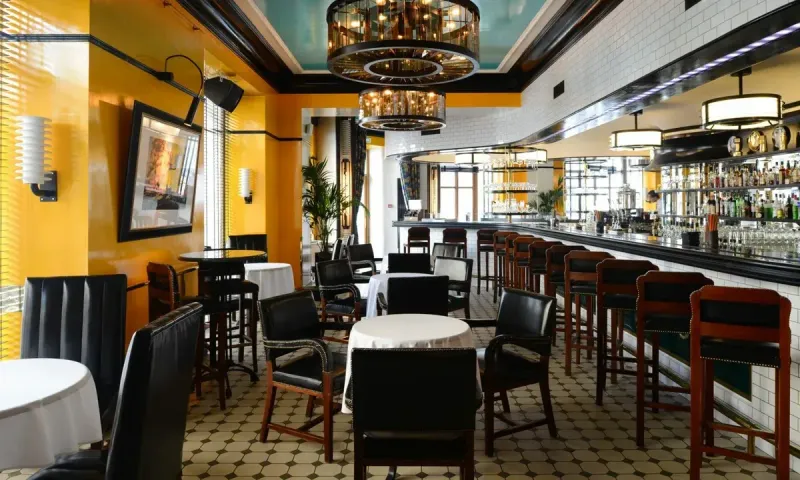
Bruno is a classic meat restaurant without the tired feel of a steakhouse. Lucky Group built the space around a grill oven, dry aging, and an unpretentious, expensive dinner in the centre of Moscow. Tom Halpin and Evgeny Aleksandrov work with Argentine, Japanese, and Russian cuts: ribeye, tenderloin, picanha, and porterhouse all spend at least four weeks in the dry-aged cabinet. The evening here rests on the meat, confident service, and the bar, not on extra decoration. This is where you go when you want a steak with no compromises and the plain, almost old-fashioned confidence in the main product.
08.08.2026
The best places in the city