Carniceria Vino
Solyanka, 1/2s1
Opens at 17:00
Opening hours:
Opens at 17:00
Monday17:00-00:00
Tuesday17:00-00:00
Wednesday17:00-00:00
Thursday17:00-00:00
Friday17:00-00:00
Saturday17:00-00:00
Sunday17:00-00:00
Solyanka, 1/2s1
Opens at 17:00
Opening hours:
Opens at 17:00
Monday17:00-00:00
Tuesday17:00-00:00
Wednesday17:00-00:00
Thursday17:00-00:00
Friday17:00-00:00
Saturday17:00-00:00
Sunday17:00-00:00
Denis Bobkov's Argentine meat restaurant with cuisine by Roman Palkin. Here the meat is tracked from choosing the cow to aging the cuts, and the wine cellar is built around Malbec.
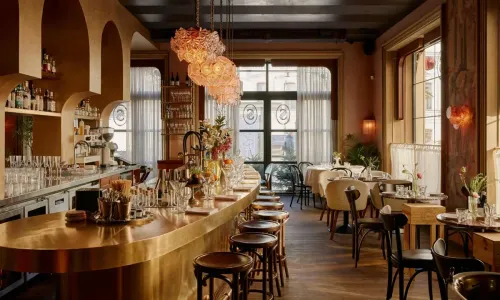
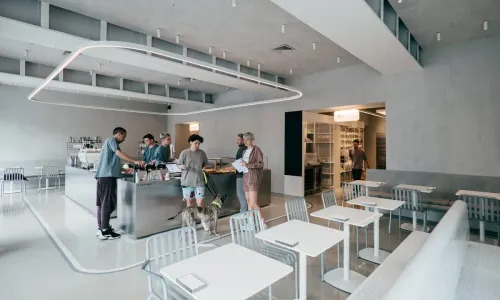
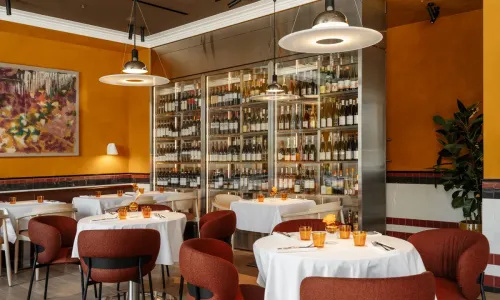
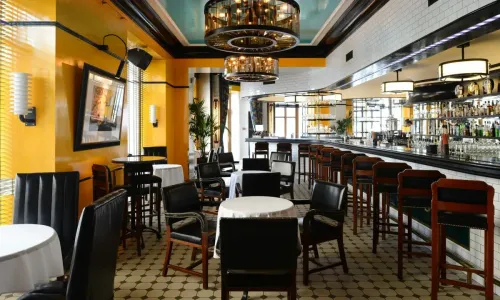
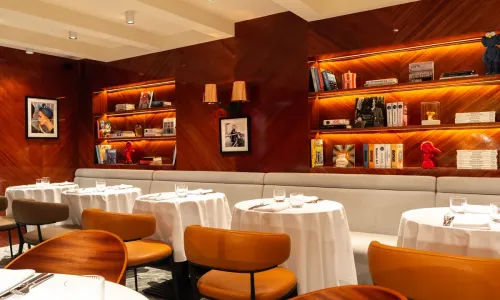
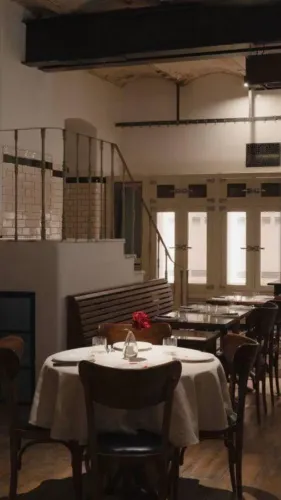
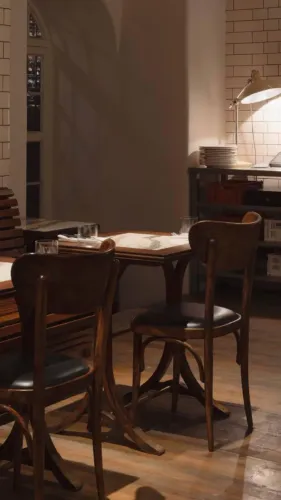
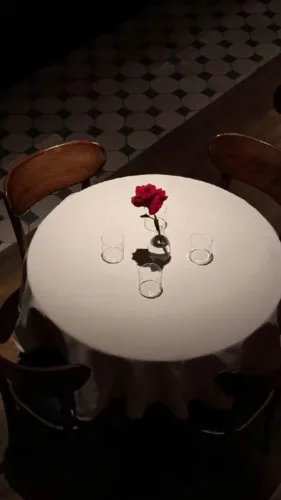
Carniceria Vino is hidden in the basement of the Masa Madre bakery on Solyanka, but the conversation here is about scale from the first minute, not intimacy. Inside are three rooms with different moods, seating 80 guests total: long tables among the bottles in the wine cellar, seating next to the aging chamber and the fridge with house-made salami, and the main room with a marble counter by the open kitchen. The floor is built from old wooden beams, the walls are tiled, the ceiling is left without decorative finishing, and fresh roses sit above the tables. The space doesn't try to imitate Buenos Aires literally, but the heat from the ovens, the hooks, the hanging jamón and the smell of wood make the Latin American accent very clear.
Our restaurant guide's team finds this one of the city's best meat restaurants, and it's worth visiting above all for the atmosphere and the steak.
The kitchen is run by Roman Palkin, who did a stage with Francis Mallmann at Ramos Generales and brought to the Moscow project a fire-based technique central to Argentine tradition. Here they use an asador, an adobe oven, and a grill shipped over from Argentina in a sea container. Vegetables are cooked over open heat just like the meat. This logic runs through the whole menu: fire here isn't a dramatic backdrop but the basis of the kitchen. So even the simplest-looking dishes are built not on sauces and garnish but on temperature, texture, smoke and the precision of the ingredient.
The project's core product falls under the responsibility of butcher Anton Loshchilov. He oversees the feeding and the aging of the cuts and runs the in-house charcuterie. It shows immediately in the appetizers: beef chorizo, beef felino, a truffle version of salami, and cecina give a whole range of flavors, from denser and spicier to thin and dry. Alongside the meat section are a tartare with potato chips and a bone-marrow tartare, served on bread right off the bone straight from the fire, while the marrow is still warm.
Guests get the chance to compare young and old cow on identical cuts, to feel the difference not in abstract words but in the taste and texture of the meat. The menu has bone-in ribeye and striploin, with the aging period matched to the animal's age: an older cow needs more time. Alongside this section lives another Argentine line. Sorrentinos with braised oxtail read more like oversized ravioli, empanadas are made with both braised beef and trout roe, and morcilla, house-made blood sausage, is served with a salsa of tomatoes, capers and cucumbers.
The fire-charred vegetable salad is built from eggplant, tomato and zucchini, with herbs, oil, pesto and green chimichurri added. Ramiro peppers are first charred over coals until the skin blackens, then combined with smoked olive oil and anchovies. Gnocchi are made from potato that's already been through the heat, and served with porcini, cheese and pepper sauce. Even the mountain trout for the restaurant is farmed in Ossetia, in the Karmadon Gorge, drawing a direct parallel to the Patagonian trout so important to Argentine gastronomy.
Wine here isn't a decorative accompaniment to the meat but the project's second pillar. The cellar holds 6,500 bottles and keeps growing, with the central spot given to Malbec: 66 labels appear on their own, and another 45 go into various blends. The bar leans toward Italian aperitivi and digestivi, gathering amari, bitters and vermouths, and also pours a Fernet and cola, hard to imagine contemporary Buenos Aires without. So the restaurant doesn't reduce to a list of steaks, but becomes a place where the meat, the wine and the shape of the evening are thought through as a single story.