Mashenka
Varvarka, 14
Opens at 12:00
Opening hours:
Opens at 12:00
Monday12:00-00:00
Tuesday12:00-00:00
Wednesday12:00-00:00
Thursday12:00-00:00
Friday12:00-00:00
Saturday12:00-00:00
Sunday12:00-00:00
Varvarka, 14
Opens at 12:00
Opening hours:
Opens at 12:00
Monday12:00-00:00
Tuesday12:00-00:00
Wednesday12:00-00:00
Thursday12:00-00:00
Friday12:00-00:00
Saturday12:00-00:00
Sunday12:00-00:00
Alexander Rappoport's restaurant with cuisine by Igor Grishechkin brings together contemporary Russian gastronomy on Varvarka, built around familiar flavors, Russian wines and details with character.
"Mashenka" talks about Russian cuisine without museum-piece solemnity and without trying to turn it into a spectacle — but does it succeed? Here they work with familiar flavors and clear associations, but assemble them at the level of a major restaurant project.
Our restaurant guide's team finds this hardly an everyday spot, but a very fitting address for an occasion, or a dinner where you want to show Russian cuisine to a foreigner.
Igor Grishechkin runs the kitchen, and his approach here reads not as a set of flashy tricks but as an engagement with the memory of flavor. The menu is large, but assembled so it doesn't fall apart into random hits. The dishes lean on familiar Russian ingredients, but restaurant technique gives them their form. Crayfish are turned into a sausage format and served with a rich crayfish sauce and purée; the theme of cabbage rolls is reworked through crab and Brussels sprouts; and a tiramisu-themed dessert takes on a Borodinsky-bread tone through coriander. Alongside them: gray shchi from the oven, a hazel-grouse pâté with apple braga, potato doughnuts with red caviar, pike-perch, root vegetables and quail. Because of this, the menu keeps both a sense of home memory and the precision you'd expect from a major restaurant.
Alexandra Vodnitskaya builds the bar list in the same register. She's not interested in exoticism for its own sake but in ingredients that are natural to Russian cuisine yet sound unexpected in a glass. So the cocktails feature beet, roasted pumpkin and other familiar ingredients, and moonshine, bread wine and polugar spirit take on an important role. Even the butterfly theme chosen for the list works not as decorative play but as a careful Nabokovian rhyme within the overall concept.
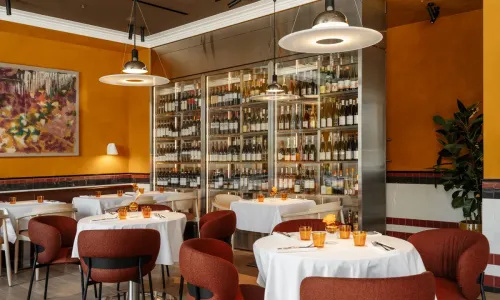
Elena Kapanelli builds the wine section entirely on Russian producers. The list is organized geographically and gathers both small wineries and familiar names. Because of this, the idea of contemporary Russian cuisine doesn't stop at the food but continues in the glass, and dinner holds a single tone from the first course through to the end.
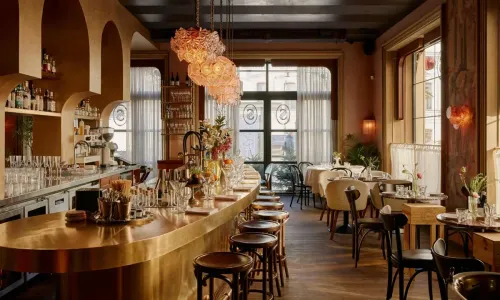
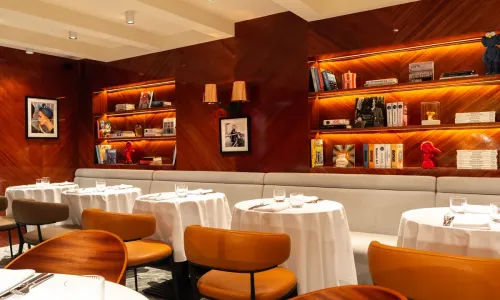
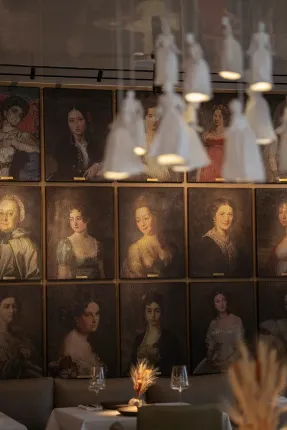
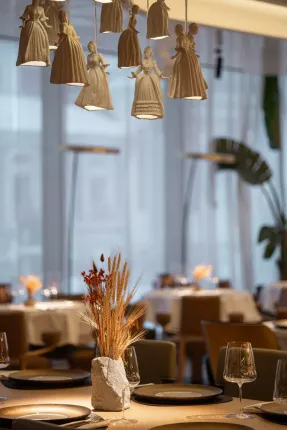
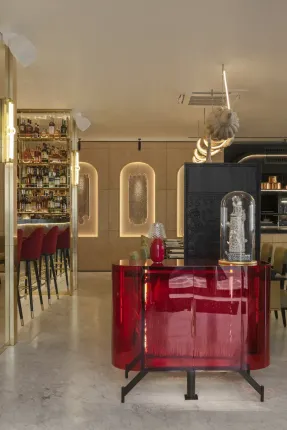
ARCHPOINT's interior works toward the same idea too, but without directly restating "Russian style." The room is filled with portraits of women named Maria from different eras, hung in a dense wall and covered with a light metal mesh. Inside are samovars, an oven at the center of the kitchen, a graphic motif of a Russian braid, and a few ironic details you don't notice right away.