Intelligentsia 2.0
Alexander Solzhenitsyn Street, 17 building 1
Opens at 12:00
Opening hours:
Opens at 12:00
Monday12:00-00:00
Tuesday12:00-00:00
Wednesday12:00-00:00
Thursday12:00-00:00
Friday12:00-00:00
Saturday12:00-00:00
Sunday12:00-00:00
Alexander Solzhenitsyn Street, 17 building 1
Opens at 12:00
Opening hours:
Opens at 12:00
Monday12:00-00:00
Tuesday12:00-00:00
Wednesday12:00-00:00
Thursday12:00-00:00
Friday12:00-00:00
Saturday12:00-00:00
Sunday12:00-00:00
"The Intelligentsia 2.0" is a restaurant in Taganka by Alexei Tikunov, where Alexander Galuza brings together seasonal ingredients, original technique, and a calm urban atmosphere.
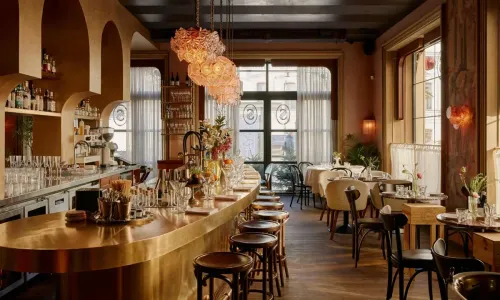
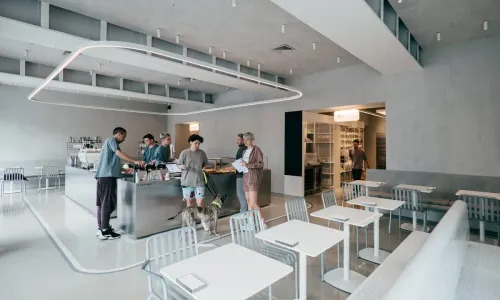
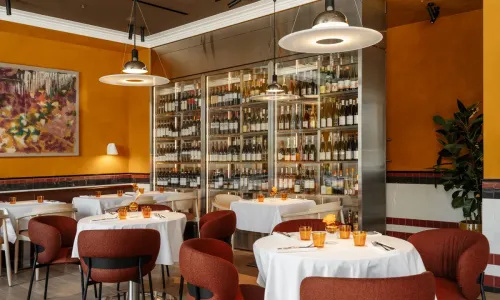
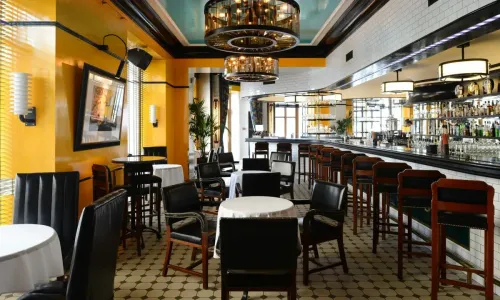
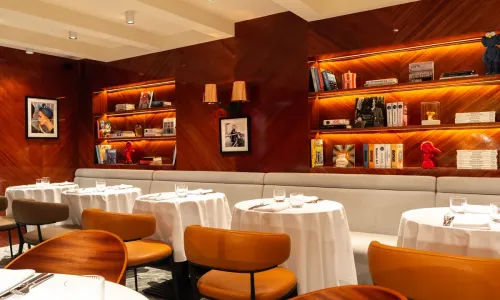
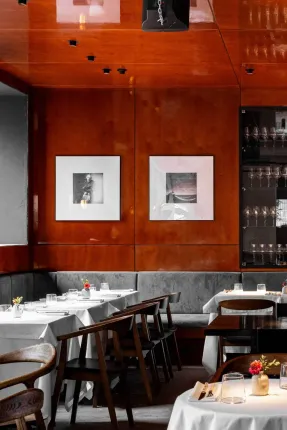
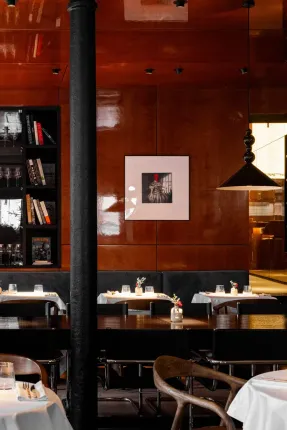
The restaurant occupies a historic building of the Alekseevskaya Sloboda on Alexander Solzhenitsyn Street. The interior, by Georgy Markaryan and Stanislav Chernyavsky of RZB United, draws on a mid-20th-century aesthetic: the room has plenty of wood, natural fabrics, soft light, and calibrated geometry. Instead of coarse decoration, there's a quieter scenario: cozy seating, a shared oak table for a small group, and the sense of a place where the neighborhood's history stays part of the dinner.
Alexander Galuza splits the gastronomy into two directions. The first is the main room, with original cuisine close in mood to a brasserie: a clear form, seasonal ingredients, artisanal work, and Asian accents that add depth to the dishes. The second is a Chef's Table for six guests, a more intimate, focused format. It's reached through a gallery with mosaic from the Serp i Molot factory, so the walk to the table becomes part of the overall impression.
The kitchen's central idea is respect for the ingredient without an overdisplay of technique. There's no attempt to complicate flavor for effect: simple ingredients are opened up through seasonality, precise handling, and pairings where the chef's hand is felt. The format suits both an unhurried dinner and a closer look at the restaurant's more experimental side, if you want to see the kitchen's work up close.
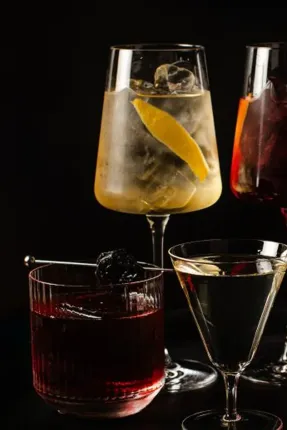
Head sommelier Andrei Trunov builds the wine list. What matters here isn't big names for their own sake, but a wine's ability to continue the dish and the conversation at the table. In the evening a live detail is added: vinyl on Fridays, which shifts the room's rhythm without club-level volume. In warm weather, another scenario appears: a terrace for a cocktail, a glass of wine, or a light dinner outdoors.
"The Intelligentsia 2.0" rests on a combination of cultural context and very practical restaurant matters: comfortable seating, attentive lighting, clear service, and a kitchen with its own point of view. In Taganka, the result isn't a museum piece about the past but a living city restaurant, where the historic address supports the mood without standing in for flavor.