Top 10 Best Restaurants in Moscow — Where to Go
The Taste editors' ranking of the 10 best restaurants in Moscow — signature cuisine, proven chefs, our critics' ratings.31.03.26
Choosing a restaurant in Moscow is no simple task: the city has hundreds of good places, and genuinely outstanding ones are far fewer. We've put together the top 10 best restaurants in Moscow, where cuisine, service, interior, and that hard-to-pin-down quality that makes you come back all line up. The roundup features projects with signature menus, strong chefs, and a consistent standard, which we've checked in person.
1st Tverskaya-Yamskaya, 21
A joint effort by two restaurateurs, Vladimir Perelman and Dmitry Blinov, each of whom has long proven their ability to build projects with character. The name translates as "sage" — an unassuming plant that, in a chef's hands, reveals unexpected depth. That principle — beauty in the non-obvious — underlies the whole concept.
The kitchen is built on ingredient logic: seasonal ingredients determine the menu, not the other way around. Blinov and his team work with farm deliveries, minimally processed fish, and greens from their own beds. The menu holds items that can't be copied: every recipe is tied to a specific ingredient from a specific day. The presentation is clean but calibrated down to the millimeter.
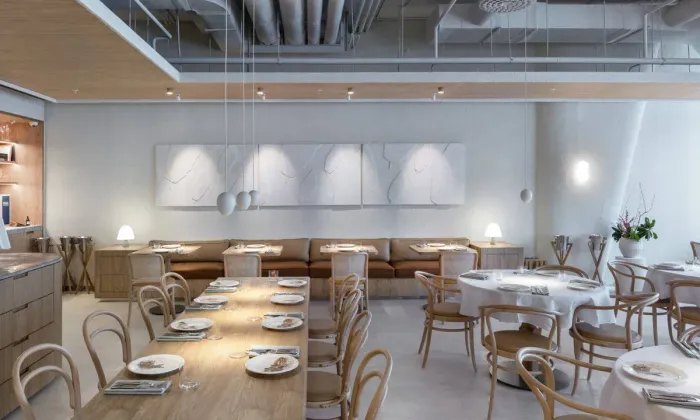
The interior is designed as an extension of the kitchen: natural textures, a natural palette, an open space without excess decor. The atmosphere is focused — this isn't a place for noise, but for eating. Sage is one of the best restaurants in Moscow for those who value the ingredient over presentation, and quiet over ambience.
Malaya Bronnaya, 21/13s2
A restaurant by the AVA team — Anton Pinsky, Artem Losev, and Vitaly Istomin. The group's second project, launched on the wave of the first one's success. Chefs Losev and Istomin work the kitchen together, keeping to the concept of "one team, two voices": the menu traces both the precision of the European school and Asian boldness in combinations.
The menu spans a wide range — from raw starters and tartares to hot dishes over coals and from the oven. Seafood is delivered daily, meat undergoes controlled aging. The presentation balances visual impact with culinary logic — every element on the plate is justified by flavor, not decoration. The cocktail list is serious, and the bar team works on par with the kitchen.
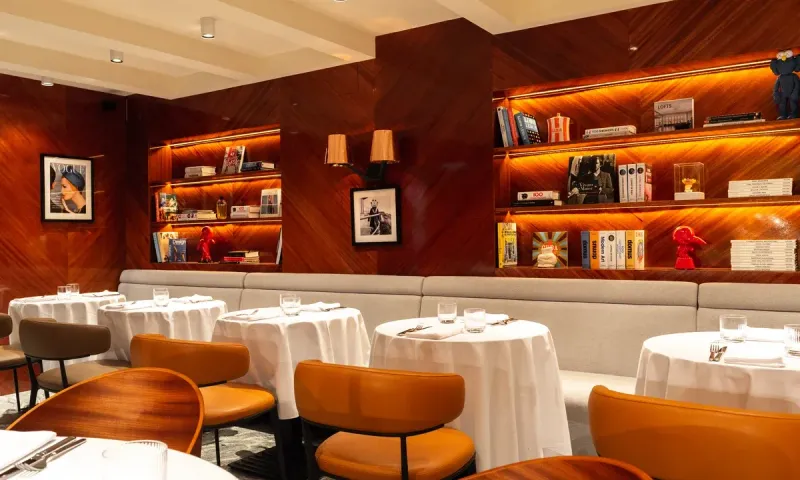
The space is done in dark tones with warm accents: deep seating, natural stone, soft side lighting. Patriki is built for an evening format and a long dinner. A restaurant for those who come not for a quick lunch, but for a full culinary evening.
A project by Anton Pinsky and Dmitry Romanov, whose popularity began before it even opened — the announced concept of "new ethnic cuisine" made waves back at the announcement stage. The idea: the cuisines of the Caucasus, the Middle East, and Central Asia, reworked through a modern restaurant lens, with an emphasis on local ingredients.
In practice, this shows up in a menu where lavash sits next to tartare, and pilaf is served not from the cauldron but in individual, jewel-precise portions. Meat is cooked over open fire, vegetables on the grill and in the tandoor. Fish and seafood form a separate line, unexpected for an ethnic format. The brand chef sets the direction, while the Folk Team runs the kitchen, having built its own distinctive style.
The interior is designed as a modern interpretation of a caravanserai: natural stone, warm wood, carpets, handmade ceramics. The space is multi-level, with private zones and a common hall. Folk is one of those Moscow restaurants where the kitchen works the edge between ethnic and avant-garde, without sliding fully into either.
A Greek restaurant from Lucky Group and brand chef Glen Ballis — an Australian with twenty years of experience in fine-dining restaurants across Southeast Asia and London. Eva in Khamovniki is the second project in the lineup, after the spot on Bolshaya Gruzinskaya, but with an expanded concept and its own character.
The kitchen is modern Greek, without a museum-piece attachment to tradition. Ballis takes classic recipes and rethinks them through the lens of the ingredient: fresh fish, farm vegetables, cold-pressed olive oil, homemade cheeses. The wood-fired oven is the kitchen's central element, handling meat, fish, and vegetables alike. Bread is baked right here. A separate line: meze and cold starters, best ordered for the whole table.
The interior is bright, Mediterranean: whitewashed walls, warm wood, ceramics, plenty of live greenery. The veranda operates in summer. Eva is a restaurant to visit in Moscow for a relaxed dinner in a Mediterranean spirit, when you want quality without formality.
A Japanese omakase restaurant by Lucky Group on Bolshaya Nikitskaya. The format is strict: dish selection rests entirely with the chef, and the guest trusts the cook and his team. Behind the counter is Alexey Lopatin, who worked at Tokyo's Nobu under Nobuyuki Matsuhisa and at New York's Sushi Nakazawa. That training defines everything — the rhythm, the cutting, the serving temperature.
The menu is assembled from seasonal fish and premium-class seafood. Sushi, nigiri, sashimi — a minimum of items, maximum attention to each one. There's almost never any repetition between visits. A dedicated specialist curates the sake collection, and the cocktails are built around a color concept — each drink is tied to a chromatic idea.
Design by Natalia Belonogova's bureau: brick vaults, light wood, minimalist furniture. The bar counter is the best seat — you can see the whole process from there. Jun is one of the best omakase-format restaurants in Moscow, where Japanese tradition is recreated with no adaptations or simplifications.
A fish brasserie on Tsvetnoy Boulevard — a joint project by Folk Team and Dreamteam. The concept: seafood gastronomy plus beer culture. Brand chef Evgeny Tsyganov and chef Ivan Markov have done away with meat entirely — every dish, even traditionally meat-based ones, is made from fish and seafood.
The result is a menu that surprises even a Moscow public used to experimentation: fish hot dogs, tuna "burgers," anchovies in every possible format — from salted to fried. The raw section: tartares, ceviche, oysters. Hot dishes: grill, deep-fry, oven. The beer list is built around the fish: craft, lambics, sour ales. Cocktails follow a marine theme.
The interior evokes a port market: rough textures, metal, wood, exposed pipes. The atmosphere is loud and lively. Anchovy's Club is a restaurant for those tired of the usual dinner and ready for a format where fish isn't a side — it's the only star.
The name nods to the Italian word "osteria" — a tavern with a short menu and good wine. The Moscow interpretation: Mediterranean cuisine focused on seafood. Once a week, the ice display fills up with fresh catch: the guest picks the ingredient, and chef Vittorio Cirresi cooks it to order — grilled, oven-baked, or steamed.
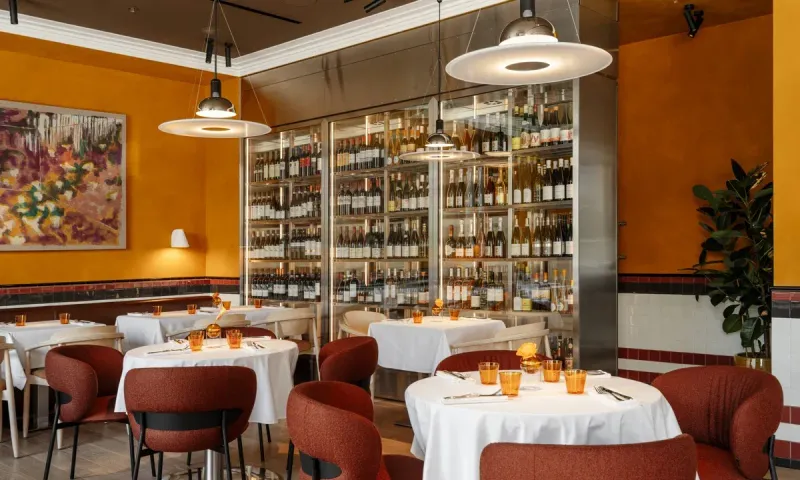
The raw bar offers oysters, tartares, sea bass, scallops. The hot section: handmade pasta, risotto, fish and meat over open fire. Bread is baked in their own oven, olive oil and vinegar are imported from Italy. The wine list focuses on Italy: from budget-friendly bottles to aged collector's ones.
The interior is warm, with elements of a classic Italian osteria: terracotta tile, wooden beams, soft lighting. The atmosphere is relaxed, without any big-city tension. Osteria 345 is a restaurant for an evening when you want simple, honest Mediterranean cooking without conceptual complications.
A French bistro by Lucky Group on Nikitskaya, immersing you in the atmosphere of rural Provence. Designer Alexey Penyuk solved the challenge of maximum coziness without losing French chic: barn-board ceiling, travertine floor, walls and windows finished in natural stone and fabric.
The kitchen is classic French with a farm-to-table lean: onion soup, duck breast, ratatouille, tartare, bouillabaisse. Bread and pastries are made on-site — croissants, baguettes, éclairs. The pastry section works as a world of its own: tarte Tatin, crème brûlée, mille-feuille. The wine list is French, focused on Burgundy and the Loire Valley. The cheese trolley is a ritual all its own.
Mamie is neither a reconstruction nor a stylization: it's a restaurant that takes French culinary tradition seriously. Breakfast, lunch, dinner — every format is done properly. A top Moscow restaurant for those drawn to France in its culinary dimension.
A signature project by restaurateur Alexander Oganezov, with chef Ruslan Polyakov running the kitchen. The format: a culinary journey — the Mediterranean, the East, and the Indian subcontinent all converge on one menu. Octopus sits next to curry, tartare next to hummus, pasta next to cured lamb.
That kind of spread could look chaotic, but Polyakov builds balance through a unified culinary style: an emphasis on texture, temperature contrasts, and working with acidity. Every dish is its own story, but in the context of the shared table, the items add up to a coherent tasting. The cocktail list uses Eastern ingredients: saffron, cardamom, rosewater.
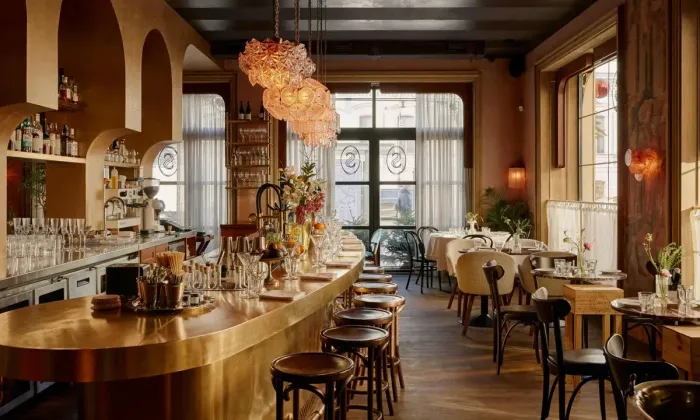
The interior is eclectic: warm wood, velvet, brass, soft lighting. The space is built for a long evening. Muse is a restaurant for those ready for culinary experimentation and not expecting predictability from the menu. One of the most unconventional places among Moscow's top restaurants.
Aram Mnatsakanov's Italian restaurant on Tsvetnoy Boulevard. Chef Denis Savoteev built the menu on classic Italian recipes given a signature treatment. Key ingredients — truffles, olive oil, anchovies, balsamic vinegar, capers — are imported directly from Italy. The recipes were verified by Italian chefs who came in specifically for that purpose.
The pasta is handmade, from tagliatelle to ravioli. The pizza uses a thin, long-fermented dough. Meat and fish dishes are cooked over the grill and in the wood-fired oven. Desserts — tiramisu, panna cotta, cannoli — follow classic recipes with no shortcuts. The wine list is Italian and deep: Piedmont, Tuscany, Sicily, Veneto.
The interior is neo-Italian: high ceilings, exposed brick, open wine racks, warm lighting. The atmosphere is lively and loud — like a good trattoria, but on a Moscow scale. Probka is a restaurant for those who want real Italy at the table, with no adaptations for a cautious palate.
31.03.2026
The best places in the city