The Best Bars in Saint Petersburg
Eleven Saint Petersburg bars for different kinds of evenings: cocktails, wine, craft beer, billiards, cabaret, and Negroni aperitivo.24.07.26
Sometimes a city is best understood not through its restaurants, but through its bars — through how they mix drinks, people, and mood.
The best bars in Saint Petersburg aren't just venues with a drinks list. They're separate worlds, each with its own logic, crowd, and occasion. This city knows how to dream up concepts that refuse to fit one category: here a cocktail bar can double as a gallery and a listening space, a craft brewery can be a full-fledged restaurant, and a tapas bar on Petrogradka can be the most Spanish spot west of Barcelona. This selection features eleven addresses that The Taste's editors chose not for popularity, but for character. Among them is the cult El Copitas, ranked eighth in the global 50 Best Bars list, an Italian aperitivo bar with a Negroni fountain, the theatrical "Kabinet" in the spirit of pre-revolutionary speakeasies, and a bar at the AF Brew brewery inside the walls of the former Stepan Razin factory. Saint Petersburg's cocktail bars sit here alongside wine counters, shot bars, and billiard spaces — because a Petersburg evening is rarely one-note. Choose by mood: we've set the accents, the rest is up to you.
Kurlyandskaya, 48
AF Brew Taproom has taken over the grounds of the former Stepan Razin factory, and the industrial backdrop works as well as any sign. Concrete, arched vaults, exposed pipes, and massive wooden tables set a direct, slightly rough tone right away. On tap is AF Brew's own lineup — from straightforward classics to experimental brews with unexpected ingredients — alongside beers from Russian and foreign breweries. Snacks and Indian dishes are served with the beer — a pairing that surprises at first, then starts to feel natural. A place for an evening without ceremony, but with real attention to what's in the glass.
Lakhtinskaya, 8A
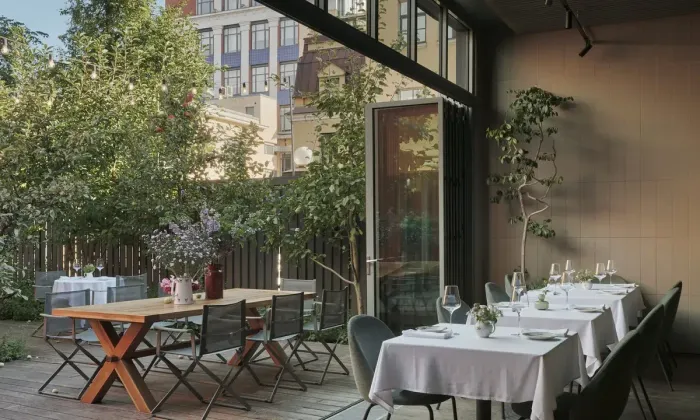
Atele on Lakhtinskaya works like a little Barcelona on Petrogradka: a copper chandelier, a shared wooden table instead of the usual counter, painted walls, and a "No Bad Days" neon sign. The kitchen relies on a Spanish josper fired with grapevine wood, giving meat, fish, and vegetables a clean smoky accent. Chef Vladimir Vorgulev builds the menu from Iberico jamón, Basque pintxos, octopus with purée, and machete bread with smoked sweet potato. At the bar there's orujo, pacharan, Galician cider, and gins. In summer, the terrace makes the place even louder and freer.
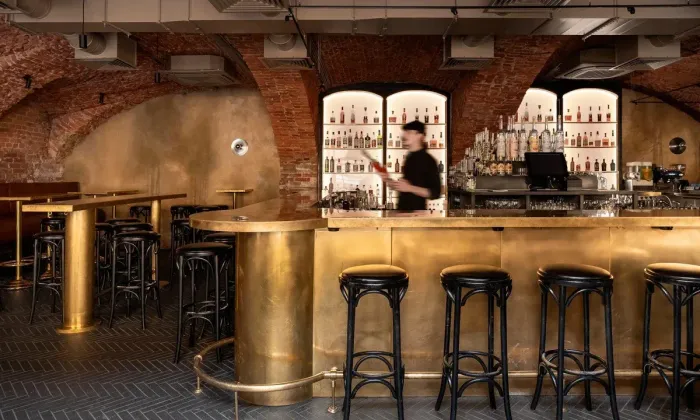
Big Wine Freaks is a Champagne bar where wine doesn't accompany the evening — it's the reason for it. Inside is loft aesthetics: brick, glass, metal, wood, and large crystal chandeliers over a curved counter. The list bets on biodynamic and small-grower Champagne — behind that is not a trend but a consistent stance. People don't come here for a universal glass "to go with something," but for a conversation about taste, style, and producers. Parties do happen, but the wine counter still sets the tone: the place remains one of the most recognizable for those who like to drink thoughtfully.
El Copitas started as a venture between three friends and grew into one of the country's most recognizable bars: in 2021 the project made the top eight of the 50 Best Bars list. After a renovation for its tenth anniversary, the space became darker and more symbolic: DA Bureau built the interior as an allegory of a burned church, with Mesoamerican ornamentation and a dense bar dramaturgy. Igor Zernov, Artem Peruk, and Nikolai Kiselev kept the main thing intact — the feeling of a closed world you don't enter just for a cocktail. Mezcal here isn't an ingredient but the language the bar speaks to its guests in.
"Horovod" from AF Brew shows that a shot bar can be composed and contemporary without losing its simplicity. In the Basseyny Partnership house, spirits become the main subject: Russian and foreign distillates, house-infused vodkas on kimchi, tonka beans, macadamia, and passion fruit. Beer is there too, but now as part of the overall system rather than the sole reason to visit. The food runs to pickles, tapas, waffles, and draniki (potato pancakes). A bright room with windows onto Nekrasovsky Garden and a historic frame set into the partition makes the evening unexpectedly gentle. A place simple in form but very deliberate in its details.
"SHUM" lives inside the Vladimir Mayakovsky house-museum, and that address alone sets a special lens. Inside, the space works like a stage: people come here not just to drink but to catch the program. Wednesdays and Thursdays bring poetry slams, lectures, and book-club meetings; weekends bring live music. "Cabaret" in the name isn't retro styling — it's an exact description of a format where art and a party share the same table. There's no need to come with a plan: one's already been written for you, you just have to pick the evening.
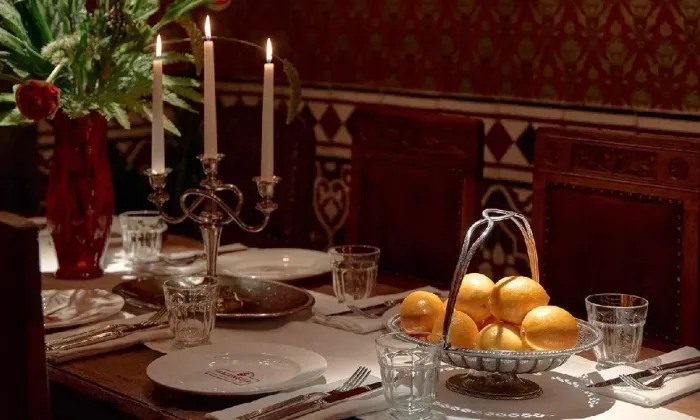
"Kabinet" is built as a theatrical fantasy of pre-revolutionary Russia during Prohibition, when drinking was only possible in the hidden back rooms of restaurants. Dim light, candles, bartenders in strict suits, and live music aren't decoration — they're the rules of the game. The list holds 38 cocktails, styled as a tarot deck; over a glass you can play a hand of poker. The place works for a date, a business meeting in an unconventional setting, or an evening with friends. The important thing is that the staging never turns into a museum piece: the role is played well, but a living bar remains inside it.
At Octave, sound isn't background — it's the reason to come. At the entrance stand two hi-fi systems: a 1978 Altec Lansing with tube amplification and a hand-built Pitt & Giblin Superwax. Around them: dark wood, low tables, vintage lighting, records, and works from Saint Petersburg galleries. Nikolai Orekhov built the bar list: Lemon Pie Negroni, a Perfect Mojito with gin and agricole rum, Adonis Russian Tea. The wine side is serious too — over a hundred avant-garde and terroir-driven labels. Weekends bring DJs and dancing; weekdays bring vinyl and conversation without having to shout over the room.
Orthodox, near Ploshchad Vosstaniya, builds its bar list like a dictionary of Russian culture. Every cocktail is tied to a name or a work of art: "Nutcracker," made with buckwheat vodka and medovukha, nods to Tchaikovsky; "Sleeping Beauty," with sparkling wine and chamomile liqueur, nods to ballet aesthetics. It's not just wordplay with names, but a way to start a conversation through familiar codes. A semicircular counter, leather sofas, and a mix of loft and high-tech keep the space somewhere between intimate and lively. A good choice for an evening when you want not just a drink, but a story in a glass.
Solids combines a billiard club and a cocktail bar so that neither feels like an afterthought to the other. The interior draws on Wes Anderson's "The Grand Budapest Hotel" and mid-century American motels: mid-century with irony, but without straightforward nostalgia. The space splits into three zones: a room for cocktails before the game, the main room with two pool tables, and the Orange Room — a separate, David Lynch-inspired room available to book. The menu offers vegetables with hummus and junk food; the bar runs classics alongside signature versions. The rhythm of the evening is clear: drink, play, repeat.
Tagliatella Caffe builds its evening around Italian aperitivo culture. Behind the counter works an all-female team in white double-breasted jackets and signature headscarves, and the visual references read instantly: Harry's Bar, Camparino in Galleria, classics without museum stiffness. The main symbol is the Oleg fountain, where guests pour their own Negroni — a simple gesture, but a memorable one. The list holds amari, bitters, vermouths, seasonal cocktails, and "Bitter Tuesday" with a distillate tasting. In the open kitchen, pasta and pizza are made by hand, so the aperitivo never goes without food.
24.07.2026
The best places in the city