San Si
Petrovka, 15s1
Opens at 12:00
Opening hours:
Opens at 12:00
Monday12:00-00:00
Tuesday12:00-00:00
Wednesday12:00-00:00
Thursday12:00-00:00
Friday12:00-01:00
Saturday12:00-01:00
Sunday12:00-00:00
Petrovka, 15s1
Opens at 12:00
Opening hours:
Opens at 12:00
Monday12:00-00:00
Tuesday12:00-00:00
Wednesday12:00-00:00
Thursday12:00-00:00
Friday12:00-01:00
Saturday12:00-01:00
Sunday12:00-00:00
A two-level Chinese restaurant by Lucky Group on Petrovka. Brand chef Vasily Zaitsev cooks Cantonese and Sichuan dishes, and the Sundukovy Sisters were behind the interior. An ambitious place that still has room to grow.
San Si is a two-level restaurant of contemporary Chinese cuisine by Lucky Group, taking over a space on Petrovka. The project is run by the tandem of brand chef Vasily Zaitsev and bar manager Artur Mirasov. The location is unusual for a restaurant of this format — Petrovka is more associated with Arkady Novikov's projects, but Lucky Group chose to set up right here.
Petrovka is an unusual location for Lucky Group, but San Si is confidently claiming the territory and building momentum.
According to restaurant critic Alexey Polikarpov, San Si's interior currently runs noticeably ahead of the kitchen and the service level. A place with striking visual presentation, but with real questions around dish consistency and attentiveness to guests.
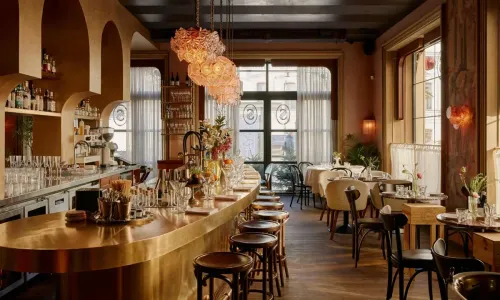
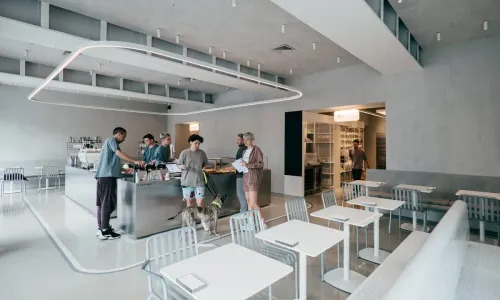
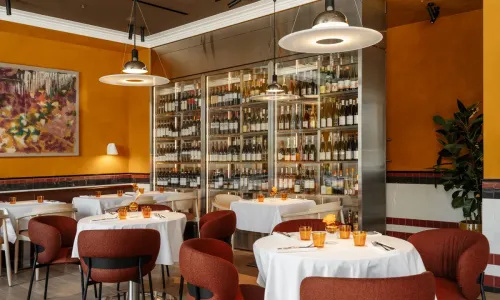
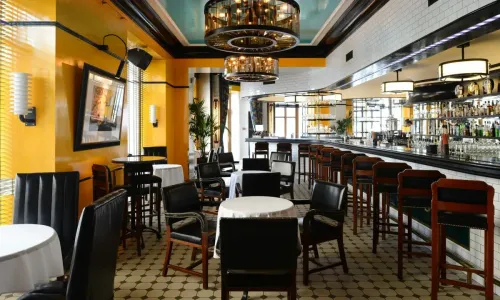
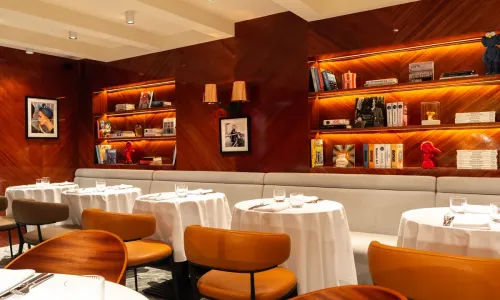
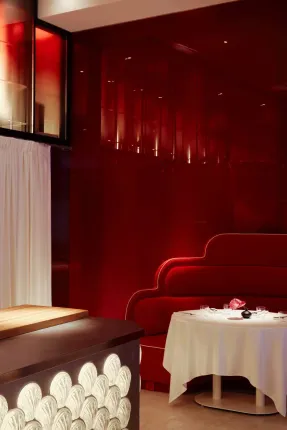
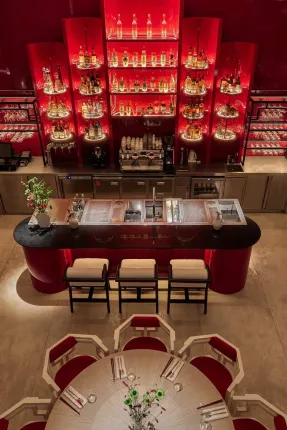
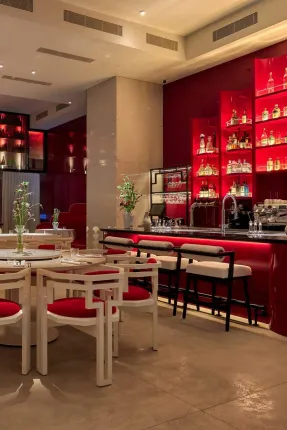
The interior was designed by studio S+S, run by Irina and Olga Sundukov. Instead of the expected red lacquer, there's tempered glass, which reads as fresh and striking. The base runs on three colors: rich red as a symbol of luck, deep black, and warm white. The open kitchen is done in chrome metal with an accent counter of Falconnier glass blocks, and the geometry of the lacquered bar nods to the silhouettes of pagodas. The walls carry antique 19th-century drawings on rice paper, photographs from Hong Kong flea markets, and works by contemporary artists. Vintage dressers and columns pair harmoniously with contemporary elements — everything is thought through down to the table setting.
Vasily Zaitsev's menu is built on Cantonese and Sichuan culinary tradition. The brand chef traveled across China gathering recipes and techniques to adapt for a Moscow audience. This isn't authentic Chinese cuisine in the strict sense, but a reinterpretation of it, where familiar flavors are served in a more accessible form. The menu's crown jewel is the imperial Peking duck, cooked over five days for perfectly crisp skin. It's served in three stages: thinly sliced pieces with pancakes, Chinese pear and hoisin sauce, then rice with duck, and the course finishes with a dim sum broth. Among the standout dishes: shrimp dim sum with delicate dough and quality filling, and salmon-belly sashimi torched at the table before serving. Chef Maxim Klykov is behind the signature sweet-and-sour sauce built on rice vinegar and orange juice, offered with pork, chicken and tiger prawns.
The bar list is built around five flavors — in Chinese culture, the number five reflects the balance of the elements. The cocktail menu is split into Spritz, Highball, Sour, Gimlet and Martini. Artur Mirasov works with the sweet-salty profiles typical of Asian gastronomy. The Bok-choy Spritz, with floral notes, is named after the vegetable; the Cubito is mixed on baijiu, the traditional Chinese distillate; and the Sea Gimlet with Blue Curaçao is made in a slush machine. The wine list is curated by head sommelier Georgy Elizarov, who has included rare single-bottle finds from both the Old and New Worlds. The tea collection by Anna Svishcheva deserves special mention — oolongs, pu-erhs and tisanes for those who prefer a non-alcoholic pairing. A traditional Yum Cha tea service with a dim sum selection rounds out the restaurant's daytime program.
Restaurant critic Alexey Polikarpov's verdict: 6 out of 10. The restaurant is visually impressive, but currently falls short on kitchen consistency and service quality. Slow course timing, inattentive staff, and uneven dish quality are the issues Lucky Group's team still needs to solve for San Si to live up to the ambitions built into it.