Café Pushkin
Tverskoy Boulevard, 26A
Open until 00:00

Opening hours:
Open until 00:00
Monday09:00-00:00
Tuesday09:00-00:00
Wednesday09:00-00:00
Thursday09:00-00:00
FridayOpen 24/7
SaturdayOpen 24/7
SundayOpen 24/7
Tverskoy Boulevard, 26A
Open until 00:00
Opening hours:
Open until 00:00
Monday09:00-00:00
Tuesday09:00-00:00
Wednesday09:00-00:00
Thursday09:00-00:00
FridayOpen 24/7
SaturdayOpen 24/7
SundayOpen 24/7
Café Pushkin is a Russian restaurant on Tverskoy Boulevard, created by Andrei Dellos as a living embodiment of the literary myth of pre-revolutionary Moscow.
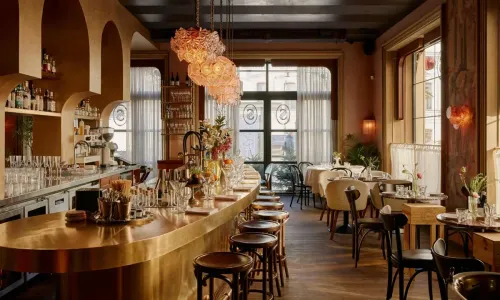
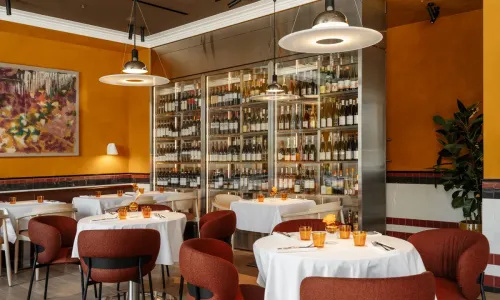
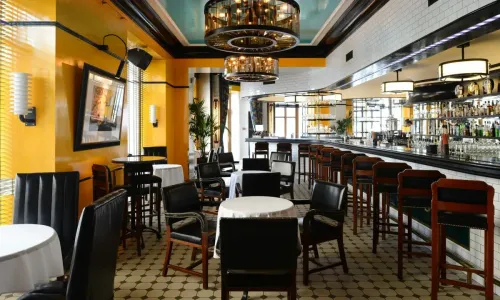
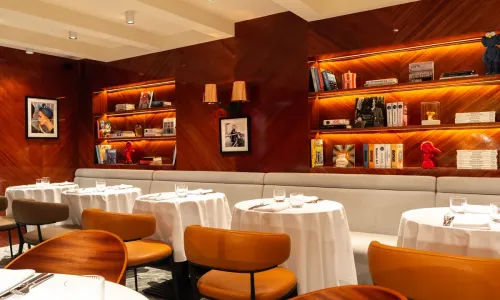
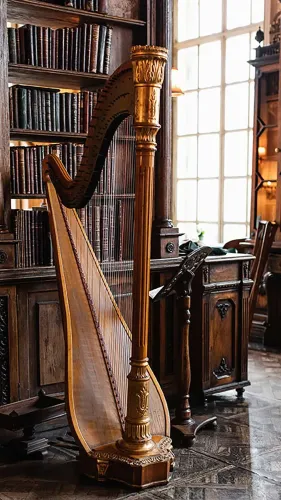
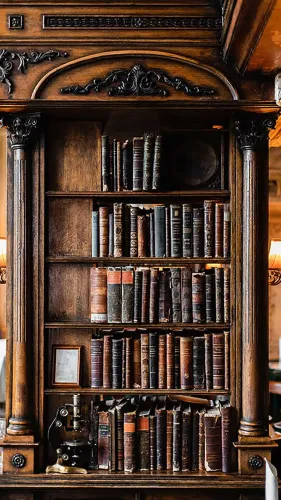
The restaurant's three rooms are built like theatrical stage sets, where every detail serves the overall image. The "Apothecary," with its panoramic windows and botanical motifs, recalls a French conservatory of the turn of the 19th–20th centuries. The "Mezzanine" is done in imperial style: gold, marble columns, heavy fabrics. But the truly iconic symbol of the place is the "Library" — a room with molded ceilings, carved dark-wood furniture and massive cabinets filled with antique editions of Russian classics from the 18th to early 20th centuries. Alongside the volumes are antique globes, microscopes and other objects fitting for a nobleman's study. The interior is deliberately excessive: the density of detail creates the feeling of immersion in a Moscow drawing room of two centuries ago — dense, almost tangible.
Our guide's team finds that here you're paying not just for the food, but above all for immersion in an elevated atmosphere unlike anywhere else.
The restaurant's name comes from an unexpected source — the French chansonnier Gilbert Bécaud's song "Nathalie," in which the characters step into a fictional Moscow café for hot chocolate. That literary image became the foundation of the concept: the place wasn't built as a reconstruction of historical fact, but as an embodiment of a romanticized idea of Pushkin-era Russia.
The menu was shaped, and continues to be led, by chef Andrei Makhov — before joining the restaurant he worked at the Hotel Metropol and organized a showcase of Russian cuisine in Monaco. His approach to recipes is grounded in 19th-century national tradition, reimagined without losing recognizability. The menu features Chateaubriand steak, pozharsky zrazy, game and river-fish dishes. Venison is served with aged Italian cheese and edible flowers, sterlet in a rich caviar-based sauce, sole with green asparagus. The plating nods to the culinary etiquette of two centuries ago, when a dish's appearance was inseparable from its meaning.
Among the items that have stayed on the menu since the restaurant's earliest years are pozharsky cutlets made to the historical recipe. They're prepared from chilled chicken meat, sized close to a large veal chop, and served with potatoes fried right in their skins with garlic and thyme, and a sauce of champignons simmered in cream and white wine.
The dessert menu is its own story. "Limonnik" and "Gzhel" are two original items that have become mainstays. The latter is built on a combination of curd cream and a crisp layer of chocolate and wafer. Andrei Makhov gathered the recipes for most of the signature dishes in his book "Classics of Modern Cuisine," published in 2008 — a rare case where a restaurant's cooking is documented by the author himself.
Our undercover guests rated it 8 out of 10 for dinner, for consistency in the details: the interior, the plating and the service all come together into a single statement that doesn't fall apart over the course of the evening.
Chef Andrei Makhov describes the restaurant's audience as people who understand Russian cuisine and come here not simply to eat but to feel a particular context. By his observation, more and more of the guests are the children of those who first tried this place in the late 1990s — which says something on its own about a draw that's hard to explain by the menu alone.