The best meat restaurants in Moscow
Six meat restaurants in Moscow — from an Argentine asador to Iberian fire. Dry aging, josper grills, wagyu, and wine lists hundreds of labels deep.04.06.26
Our restaurant guide’s team can safely say that steak is our favorite dish. If you feel the same way, this selection of Moscow’s best meat restaurants is for you.
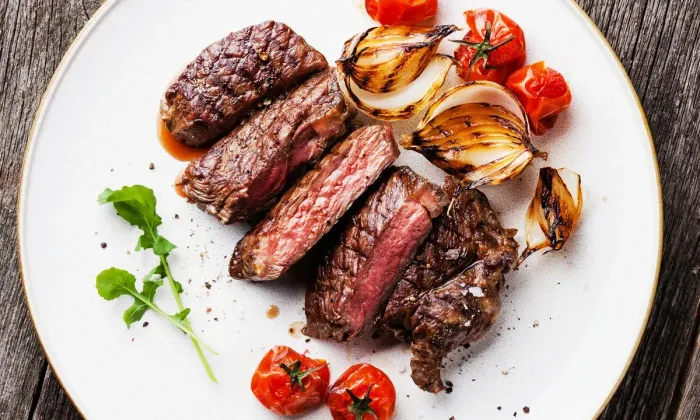
Meat restaurants in Moscow are a topic that seems simple until you actually dig in. A perfect rare steak is a task that almost always turns out worse at home than you’d like: no right cut at the nearest shop, no right heat, no four weeks of dry aging in a dedicated chamber. That’s exactly why a good meat dinner is worth seeking out from people who’ve turned it into a profession. A few things are worth knowing beforehand. Marbling determines how fatty and tender a steak turns out — and how much character it keeps even at medium doneness. Dry aging concentrates flavor and changes texture: 28 days and 200 days give fundamentally different results. The josper — a Spanish charcoal grill — works like a closed oven with the heat of an open fire, which allows for even doneness without losing juiciness. Wagyu, with its extreme marbling, and grain-fed Black Angus are the two poles between which most of the city’s meat menus unfold. This selection covers restaurants where meat is treated as a product in its own right, not just an excuse for a sauce.
Bolshoy Kozikhinsky Lane, 4
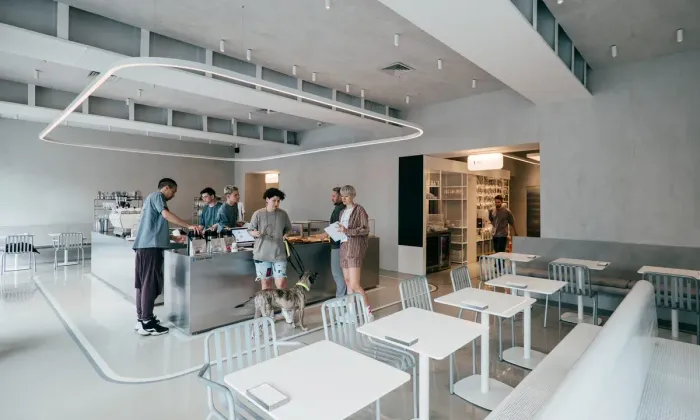
The clearest proof of the MAX BEEF FOR MONEY concept is that drinks here are cut to an absolute minimum: wine, water, tea. No cocktails, juices or lemonades. The wine list, though, runs four pages and about a hundred labels, with a clear lean toward European organic and biodynamic wines, selected by the owners of the Tre Bicchieri wine shops together with Vladimir Basov. The kitchen is led by chef D. Finyagin, who works with Angus beef from his own bio-farm near Vsevolozhsk. After slaughter, the meat spends 28 days aging in fermentation chambers — which become the space’s main interior feature: large cuts mature right in the dining room, to the left of the entrance. Ksenia Smirnova, who has worked with Tre Bicchieri, designed the gray-blue interior with bright accents. The menu fits on a single page — the focus here is depth, not variety.
Lesnaya, 9
Pavel Potseluev and Igor Zhuravlev built Zhazhda Krovi not around a menu but around an idea: meat as a material with its own history, not just a steak on a plate. A dry-aging chamber stands right in the dining room — walk up, pick out the cut you want by eye, and work out with the team when it’s best served. Aging here can stretch to nearly seven months, and some cuts additionally undergo mold-culture fermentation — a method only a handful of places in Moscow practice. Ribeye, T-bone, filet mignon, alternative cuts and six kinds of tartare all go into the Spanish charcoal grill. The wine side isn’t an afterthought either: the list took the top award at the Russian Wine Awards 2019/2020 for best creative wine list.
Marmo is set in a restored 19th-century building, and the space itself sets the tone: brick walls, muted light with local accents, leather sofas, meadow-grass panels and wooden details that all read as a nod to nature. The restaurant was created by I. Nitsenko, with chef E. Makarov building the menu around in-house-produced meat. You can watch it being cooked from any seat, since the open kitchen sits right in the dining room. Over fire, they work with a special grill fueled by camelthorn wood, which gives the meat a distinctive aroma you can’t get on an ordinary grill. Main dishes come with grilled vegetables, potatoes and a range of sauces. There’s a kids’ menu, signature cocktails, and a wine list not tied to any particular occasion. Marmo is a place equally suited to a dinner for two or a large group.
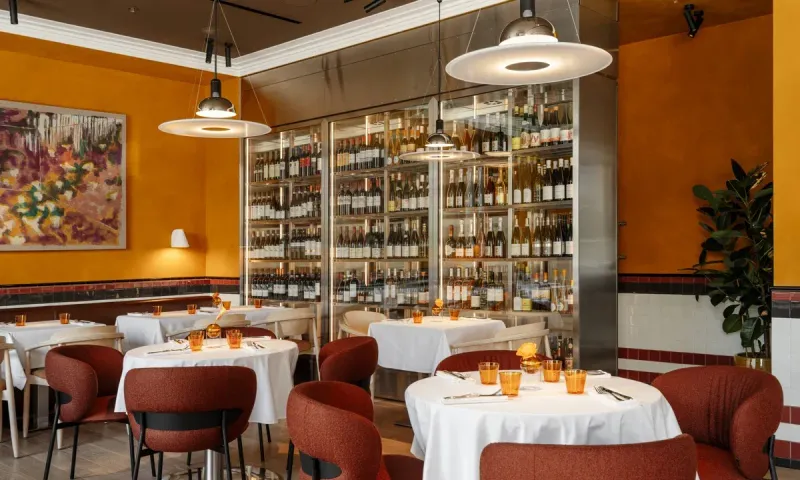
Dmitry Romanov and Veniamin Ivanov of Folk Team opened Padron as a southern European restaurant with a serious meat backbone: exposed brick, cast iron and ceramics set the tone, while concept chef Adrián Quetglas — a Michelin star holder for his restaurant on Mallorca — builds the kitchen around its own dry-aging chamber. Chateaubriand sits alongside roasted octopus and arroz a la llauna, wood-oven rice. The wine list has topped 300 labels with an obvious lean toward the Iberian Peninsula, and the dessert side is held down by pastry chef Albina Rodygina. As far as The Taste is concerned, this is one of the city’s key meat addresses.
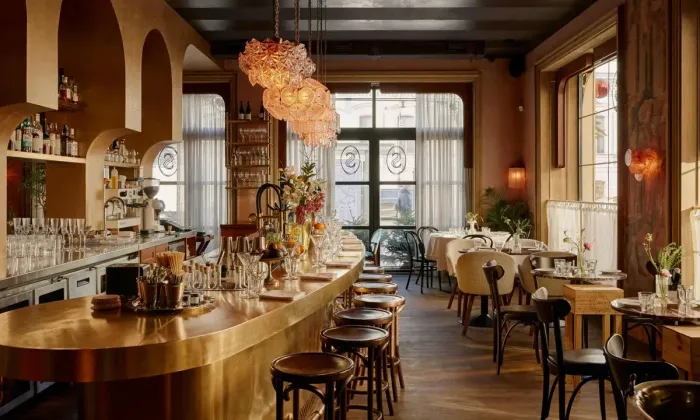
Carniceria Vino is our favorite meat restaurant in Moscow. It occupies the basement of the Masa Madre bakery on Solyanka, and from the doorway it’s already clear that the intimacy here is about concentration, not coziness. Three dining rooms seat 80 guests, each with its own character: a wine cellar with long tables among the bottles, seating by the aging chamber and the fridge holding house-made salami, and a main room with a marble counter by the open kitchen. The floor is built from old wooden beams, live roses sit over the tables, and hooks with hanging jamón hang overhead. The kitchen is run by Roman Palkin, who trained under Francis Mallmann at Ramos Generales: the asador, the adobe oven and the Argentine grill, shipped in by sea container, aren’t decoration — they’re working tools. Butcher Anton Loshchilov looks after the meat, overseeing feeding, cut aging and the house’s own charcuterie. Guests are invited to compare young and old cow on identical cuts — the difference is noticeable in the taste. The wine cellar holds 6,500 bottles.
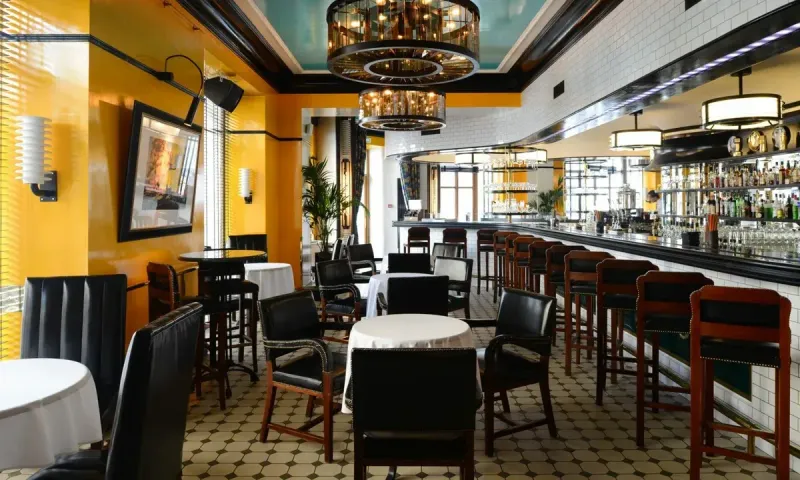
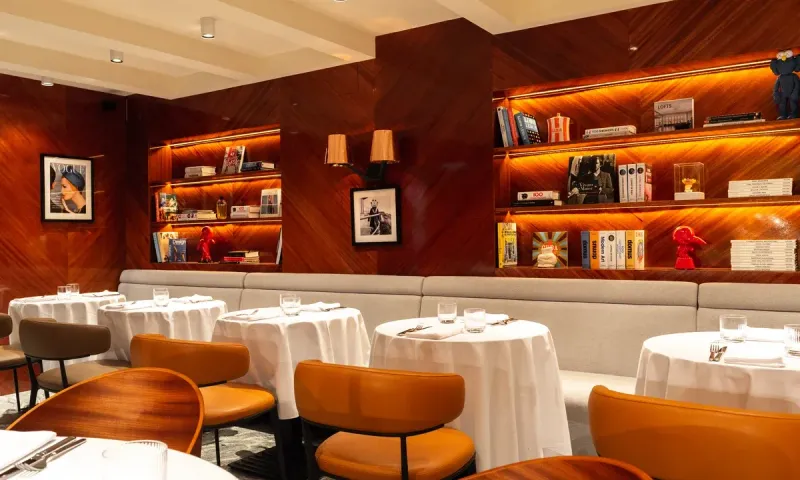
Bruno on Neglinnaya is Lucky Group’s meat project, closer in interior and spirit to a London steakhouse than to Moscow’s usual take on the genre. British designer John Whelan built the space in an early Art Deco aesthetic: dark natural leather, strict geometry, heavy textures and an open stainless-steel kitchen deliberately pushed to the front. The walls carry abstract photographs by Marianna Bernstein, which hold a rhythm without stealing attention. The kitchen is run by Tom Halpin and Yevgeny Aleksandrov, both veterans of Maya: ribeye, tenderloin, picanha and porterhouse, sourced from Argentine, Japanese and Russian beef, are dry-aged for at least four weeks. At the center of it all is a custom open-fire grill oven. The bar list was put together by Maxim Gorelik and Artyom Tokarevskikh: a Pomme Julep on absinthe, a Porto Ronco with truffle distillate, and several versions of a dry martini made to old recipes. The wine program is curated by Dmitry Kipelkin and Maria Trykova, with an emphasis on Burgundy and Bordeaux.
04.06.2026
The best places in the city