Restaurants With a Veranda in Moscow: 45 Best Addresses
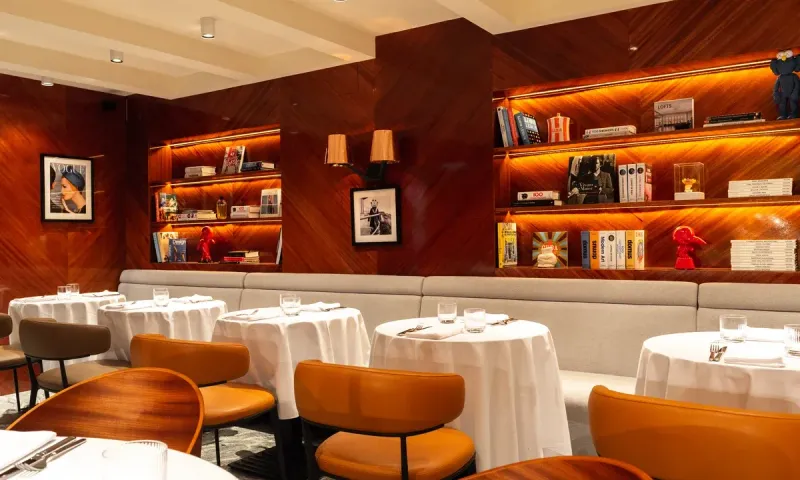
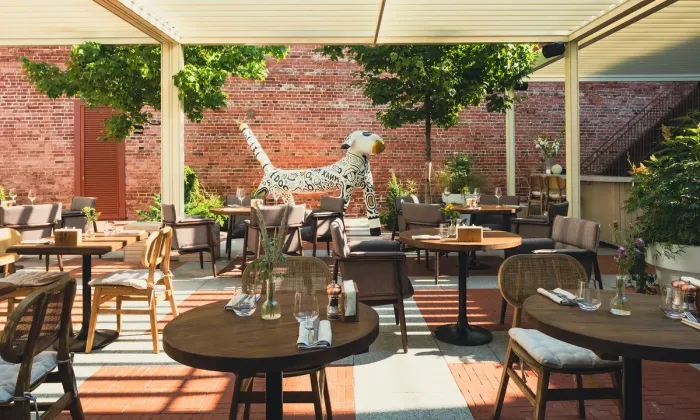
45 Moscow restaurants where the veranda is a full part of the concept, not just chairs on the sidewalk. From Basque open fire to a Greek terrace.26.04.26
"Dinner with friends on the summer veranda of a good restaurant — that's exactly what makes waiting for a Moscow summer worth it."
Muscovites start waiting for restaurants with a veranda from the first March thaw. Once the temperature climbs above freezing, restaurateurs roll out the tables, put up awnings, and open the season. But a good veranda is more than extra seating on the street. The best restaurants with a terrace in Moscow turn the open-air space into a full part of the concept: they think through the lighting, the seating, the view, and the scenario of the evening. We've gathered exactly these kinds of addresses in this roundup — from intimate courtyards to city terraces where summer isn't a backdrop but the main event. There are places here for a late breakfast, a long dinner, a get-together with friends, and an evening you'll want to stretch out for one more glass. Moscow knows how to be generous with feelings.
Granatny Lane, 19
Saray, from Lucky Group, draws in people who come not just to eat but to spend an evening at the pace of a long feast. The veranda here isn't a seasonal bonus — it's the main stage: rough wood textures, dark aged surfaces, and the smell of smoldering coals feel completely different in the open air than they do indoors. Brand chef Dan Miron built the kitchen out of two traditions — Spanish fire-grilled meat culture and Caucasian generosity at the table. By evening, once the grill picks up steam, the veranda fully becomes the restaurant's center of gravity. A big group and no rush — that's the right format for this place.
Bolshaya Nikitskaya, 21/18s1
Loro is Lucky Group's Italian restaurant, and in summer its veranda becomes the main reason to book: the street reads on a completely different scale from here than through the panoramic windows inside. Brand chef Glen Ballis and chef Nikolai Vovchinsky rewrite the breakfast menu every season, so an outdoor breakfast here is a reason in its own right, not just a continuation of last night's dinner. The place suits both a quick business lunch and an unhurried, plan-free evening equally well. For warm days, it's worth keeping a table booked — demand in season consistently outpaces supply.
Niki occupies a historic building that houses the country's oldest still-operating cinema, and its summer terrace looks the part — white linens, wildflowers, a view of the city's living center. Brand chef Dan Miron works with Russian tradition without museum-like solemnity: seasonal logic, homemade drinks, uzvar on the bar next to kvass. The veranda here suits both a weekend morning visit and a drawn-out weekday dinner — and still keeps the feeling that you're sitting not in a tourist spot but in a living city restaurant.
Eva is Lucky Group's Greek restaurant, where the logic of the open-air space is Mediterranean through and through: the tables sit close together, the noise never quite dies down, and the food format itself — meze, dips, dishes off the fire — calls for company and time. Brand chef Glen Ballis grew up on home-style Greek cooking, and it shows not in the room's decor but in how people eat here: everything is set up for sharing the table, not ordering solo. A big communal table fits naturally into the noisy feast. Seating is almost always full — the veranda books up fast in season, so it's best to reserve ahead.
Maya is a Lucky Group restaurant built around open fire as its main tool: coals, a smokehouse, hours-long slow cooking — none of it is decor, all of it is process. Australian chef Tom Halpin brought the technique of asado to Moscow: the meat is fixed to a metal cross and roasted Argentine-style for more than eight hours. The space is finished in volcanic rock and raw wood, and under the open sky that aesthetic reads even more convincingly. People come here for an energy that can't be recreated indoors, not for a quiet evening for two.
Margarita's veranda is positioned so that Patriarch's Ponds isn't a backdrop but part of the table — one of the few addresses in Moscow where the view works honestly rather than as decoration. Lucky Group built the space with complete restraint: nothing inside competes with what's outside. For a summer veranda, that matters — you can come for coffee in the morning or stretch the evening late into the night, and either way the place feels like a privilege, not an accident. The kitchen supports that tone: light, unfussy, with a focus on the season.
Sakhalin's summer terrace sits more than twenty floors up, and that changes the entire logic of open-air seating: Moscow isn't around you here, it spreads out below as an unobstructed panorama. The terrace is a full dining room, not a few bonus tables by the railing: the same live ice display, the same seafood, the same Michelin-starred kitchen. The restaurant holds to its concept of Far Eastern ingredients with Japanese technique and a Mediterranean accent, and it's precisely outdoors at night that this blend sounds most convincing — the air and the city below get added to the food.
Gorynych is a place where the veranda smells of smoke quite literally: everything here is built around fire, and the open-air summer space only amplifies that. Josper grills, a wood-fired sourdough bakery with years of history, pizza from a blazing oven — the smell is present outside just as much as it is indoors. If you're looking for a veranda for an unhurried lunch with bread and something substantial, rather than photos against greenery, this restaurant fits better than most. The interior's heavy textures contrast with the open sky and create a tension rare for summer terraces.
Gvidon's summer terrace doesn't switch the restaurant into a simplified mode — it keeps the same level: a serious wine list with seafood pairings, and Anatoly Kazakov's kitchen with its Russian-French bearing and zero decorativeness on the plate. Inside, the space is designed as an underwater world inspired by Pushkin's fairy tales — crystal, mother-of-pearl, a water projection. The veranda is different: street, air, Moscow all around. Gvidon doesn't pretend to be an everyday restaurant, and the open-air seating only confirms that — a format for people who come here deliberately.
Breakfast here has long been considered a reason to visit on its own: the chef uses produce from his own farm, and it shows on the plate without much explanation. This joint project by two restaurateurs was made with deliberate precision: Scandinavian architecture, a bakery with professional German ovens, a cocktail list built around the season. Equally suited to a business breakfast in the open air or a long dinner with a glass of Burgundy — a rarity for Moscow's summer seating.
Loona builds the feeling of summer indoors: the ground floor opens onto the city with continuous glazing, live plants blur the line between the room and the street, and a mirrored ceiling multiplies the daylight. It's a smart choice for anyone who wants a summer mood without depending on the weather's whims — the table here is comfortable in both heat and rain. The AVA Team's kitchen isn't predictable: an Italian framework, but chef Dmitry Denisov allows himself authorial departures wherever the flavor justifies it. It's a veranda format without an actual veranda — the interior was designed precisely for that.
The room and the street flow into each other: leaves outside, oak tables and an open kitchen inside — the boundary becomes a formality. Aram Mnatsakanov built this address not as a seasonal project but as an Italian restaurant with a lasting character, and its summer openness is an organic part of that. Brand chef Simone Gobbi keeps the menu within the classics, without shortcuts. People come here when they want a long, unhurried dinner — to sit with a glass of wine and know no one's going to ask them to give up the table.
Lucky Group built Mamie around the aesthetic of French Provence — travertine, aged furniture, dark wood ceilings — and the summer terrace fits into that logic effortlessly: it looks not like an add-on but a continuation of the interior. Brand chef Dan Miron and chef Taras Kirienko cook French classics — fire-grilled meat, slow braises, seasonal breakfasts. Nearby, urban quiet quickly slows the pace. The terrace works at exactly the tempo it should: unhurried, with a glass of wine, and time that's in no rush to go anywhere.
Studio APAA built the interior on Nordic minimalism: overhead light through ceiling openings, raw textures, a fireplace in the center of the room. The summer terrace here is calmer than verandas in the historic center — no lines, no random crowds. The international menu and morning dishes have been honed by the chain into reliable consistency. A good choice for a work breakfast or lunch, when predictability matters more than discovery.
BRO&N's open-air space sits right in the flow of a summer city stroll — there's constant movement here in summer, and the restaurant doesn't hide from it, it uses it. Arkady Novikov's project runs on a familiar formula: a spacious room, big tables, a rotating oven and a josper grill in plain view — all of it reads from the street too. Brand chef Mirko Dzago, who once cooked in the Kremlin, is behind the menu of pizza, pasta, and fire-grilled meat. The format is casual, but the kitchen holds its standard — a rare combination for a veranda right in the center.
Aist's veranda is one of those rare cases where a Moscow summer evening comes together on its own, without effort: not a formal protocol but exactly the kind of urban ease the whole thing is meant to deliver. Designer Evgenia Uzhegova built the space, chef Mirko Dzago is behind the chef-driven European menu — and both understand the balance between quality and lightness. One detail few people know: Aist was the first in the city to start roasting its own coffee beans on-site, so coffee here is a reason to visit on its own, no dinner required.
Polden (Midday) works toward a single state of mind: morning is over, but the serious business of the day hasn't started yet. It's here, in the courtyard, to the sound of vinyl records — actual records, not a playlist — that this in-between stretches out. The breakfast menu runs all day, reservations are only available for large groups, and solo guests and couples wait in a live line by bookshelves the team has assembled from around the world. A courtyard is a rarity in itself in this neighborhood, and here it's done with pastel restraint and a family-like tone.
Savva's terrace looks out over the historic center — the restaurant is located inside the Metropol, a few minutes' walk from the Bolshoi Theatre, and that neighborhood pays off. Inside: painted ceilings, marble columns, Michelin-starred brand chef Andrey Shmakov's modern Russian cuisine, and a pastry line by award-winning pastry chef Artyom Grachyov. The wine list runs to more than five hundred labels, including Russian ones. The veranda here is a way to show Moscow at its most formal — whether you're a visitor to the city or a longtime resident who wants to see it anew.
The building itself remembers a Soviet-era bread shop, and the concept of Remy Kitchen Bakery exists precisely in dialogue with that history: Evgenia Uzhegova's interior is assembled from furniture of that era, and the light fixtures function as sculpture. The kitchen is split into open stations the guest can see in full — the oven, the bakery, the pasta station, the bread. In summer, the boundary between the room and the street dissolves, and all that transparency of process spills out onto the veranda too: the food is cooked in plain view, and that's a deliberate stance, not a decorative trick.
With the arrival of warm weather, Amber takes on a second format: alongside the intimate Japanese dining room, a terrace and a bonsai garden appear — an outdoor, unhurried continuation of the same rhythm. A restrained interior by the Sundukovy Sisters with wood and air, a charcoal grill in the open kitchen, modern Japanese cuisine by chef Yaroslav Andreev. A project by Dmitry Romanov and Veniamin Ivanov in partnership with Anton Pinsky, this isn't for a loud night out but for evenings where an even pace, calm seating, and flavor without excess gestures matter most. In summer, the garden adds an almost meditative pause to that scenario.
The charcoal josper grill and the dry-aging chamber aren't decoration, they're working tools, and on the veranda that context doesn't go anywhere: the smoke, the heat, the smell — all of it stays with the guest. The place grew out of a collaboration between two people with a solid gastronomic background, and its level isn't sustained by being a fashionable address. In summer, the veranda turns a meat dinner into a full sensory ritual, especially with a glass from a wine list once recognized with an award for its creative selection. The right choice when you want not just to eat outdoors, but to feel that there's real technique behind the food.
This nearly two-hundred-year-old historic mansion turns its courtyard over to barbecue, intimate tastings, and live music in summer — and that works differently from a standard restaurant veranda. The building's brick architecture and mirrored interior spheres feel calmer and closer in the open air. The kitchen rests on local ingredients with an author's interpretation, and the sommelier-led wine list is built with a focus on champagne — rare récoltant producers and an in-house sparkling wine on the list. If you want a format where the evening program and the summer terrace exist as one whole, this is it.
A copper chandelier shaped like a dragon, live plants, the theatrical scale of Geometria studio's design — none of it gets lost on the veranda, if anything it takes on a different angle. Chef-driven Asian cuisine and a bet on white wines and champagne is a combination that reads especially naturally in summer: the lightness in the glass rhymes with the lightness outside. A place for anyone who cares about visual impact at the table — without shortchanging what's on the plate.
This joint project by Arkady Novikov, Anton Pinsky, and brand chef Glen Ballis was built from the start as an antithesis to the city restaurant: wooden surfaces, live fire, plenty of greenery and natural light — the feeling of a country house without leaving the MKAD ring road. In summer, the terrace becomes the main argument in favor of this address: a concept that worked as a metaphor indoors becomes literal outdoors. The menu follows the season — seasonal vegetables here aren't a side dish, they're the center of the plate. A good choice for an unhurried dinner, when what you want is quiet and a change of pace, not a new, loud opening.
This restaurant-bakery is set up so it's convenient to drop by at any time of day: in the morning for coffee and fresh pastry, in the evening for a full dinner. In summer, that logic extends to the open-air space, and the veranda becomes a natural continuation of the day rather than a separate reason to come. The Sundukovy Sisters bureau's interior, with hand-painted tile and brass details, doesn't lose its character outdoors. The kitchen, under its chef, holds to a principle of minimalism in the makeup of its dishes — European traditions without trying to blend them, each dish with its own clear logic.
For breakfast, people come here for wood-fired-oven pastry and dishes built on a fermented-dairy base; by evening, everything changes — smoke appears, along with open fire and the smell of grilled meat. The kitchen rests on in-house preparations: sauces, herbs, marinades — the team makes everything itself, and it shows even in the simple things. Floor-to-ceiling panoramic windows slide open, the boundary between the room and the street disappears, and the veranda turns into its own space with an Eastern accent.
The fifth floor of TSUM — and the terrace opens onto a view you won't find anywhere else in the center: the Bolshoi Theatre right across, with none of the crowd noise from below. Buro.TSUM is built on the logic of a modern French café with Art Deco touches, and the two chefs' kitchen leans toward fine dining. There are practically no random guests here — the place holds its reputation through both the view and the food. Veranda tables in the warm season get booked up well before summer even starts: if you want one specifically, reserve well in advance, or you'll be left with the indoor room only. A good option for a formal lunch that eases easily into evening.
At Muse, the space was designed from the start to feel alive — with an open kitchen, a visible bar, and dedicated specialists for each direction, from wine to desserts. In summer, the veranda naturally continues that principle: it's not a separate relaxation zone but part of the same textured environment the architect built indoors. The menu moves across European and Mediterranean registers without locking into a single cuisine. It's equally good here for breakfast — Muse has its own regular morning crowd — and for an unhurried outdoor dinner in the evening.
DFF grew out of a seasonal open-air veranda, and that character hasn't gone anywhere even now that the project has settled into a permanent spot. In summer, the grounds turn into an under-the-stars cinema; in winter, they flood an ice rink — the place lives year-round and isn't limited to food. The kitchen is run by a chef who worked at Noma and Hibiscus, pairing seasonal local ingredients with French and Asian techniques. The cocktail list was put together by one of the country's best-known bartenders. This is a veranda as a full cultural program, not just tables outdoors.
In summer, the veranda creates the feeling of southern Europe without any tourist-brochure gloss — that quiet hum of a warm evening that's hard to fake. The gastronomic direction is set by a concept chef with a Michelin star, the bar runs on Iberian spirits, and the wine cellar holds more than three hundred Spanish and Portuguese labels. The format works equally well for a business dinner and an evening for two.
A Greek restaurant with a summer veranda, backed by Pinsky and partners — a team with a reputation for places people come back to. The Static Aesthetic bureau built the space in the spirit of a Mediterranean villa: hand-crafted stained glass, bas-relief decor, soft sofas with rounded armrests. Chef Ramanos Iliani works with family Greek tradition, while Istomin and Losev bring an experimental impulse. The veranda opens for the season and is built for a long evening: the bar list rests on anise and fruit notes, and the pace is set by Greece itself — unhurried and generous.
Alexander Oganezov's project opens with a visual punch: painted murals under the dome, mosaics with folk motifs, hand-crafted tile, vintage light fixtures. The summer terrace continues that conversation outdoors — not as an add-on to the dining room but as the next chapter of the same statement. At the center of the kitchen is a wood-fired oven; at the center of the menu is the breadth of vision of the chef trio, free of academic rigidity. Worth coming for a long evening: first you take in the interior, then you discover the outside is no less impressive.
People choose ENO Bistro in Skolkovo not for the address but for the feeling: forest and parkland nearby, and far more open air around it than in any Moscow courtyard. The large garden-veranda is the main space here, not an afterthought — after a walk, people come here for a late breakfast or an unhurried lunch, with no reason to rush. Static Aesthetic's interior is built from wood and raw textures — not an imitation of a country house, but the real thing. A joint project by Folk Team and Vinicom, where the kitchen and the wine program coexist as equally strong draws.
Lui's terrace runs by the rules of a different city: air off the river, a direct view of the Cathedral of Christ the Saviour, sunset light that's deliberately caught here. The building itself stands on a federally protected foundation, and that proximity to history sets a special scale for the whole project. Inside: aged beams, candles, and a wood-fired oven; outside: water, air, and a long summer evening. The Italian chef holds a Mediterranean course without deviation. For an open-air dinner over the river at sunset, this terrace has few rivals.
LÚWO occupies three floors, and the terrace at the top is a reason to visit in summer on its own, not a bonus for people who couldn't get a table indoors. A joint project by ORIGIN and Ilya Esterov, it's built around an atypical take on Greek cuisine: the chef works with fire, a wood-fired oven, and Eastern spices, turning a Mediterranean base into something more personal. The bright space, with its soft forms and natural materials, flows naturally onto the open-air terrace. A bar list with fruit and anise accents, plus a separate wine program, is built for an evening with no rush.
The terrace looks out onto the park pond — and that's the main argument: water in the frame, the park close by, and the center of the city within easy reach. Large windows continue the same view from indoors, so the boundary between the room and the street is fairly nominal here. The project by Arkady Novikov and Genrikh Karpini is built on in-house production: dairy products are made on-site, pastry comes from a wood-fired oven. The format works as naturally for a family lunch with kids as for an unhurried evening with a glass of wine. In summer, this is almost a countryside scenario without leaving Moscow.
Oltremare, from Lucky Group, is built around Italian cuisine with no adjustments for local taste: chef Emanuele Pollini grew up in Romagna and worked in Michelin-starred restaurants across Europe. The wine list is well thought out, and the service holds its pace down to the details. A place for dinner when what matters is how the whole experience is put together, not just what's on the plate. In 2025 the project was named "Restaurant of the Year" by the Plavno awards, and in summer that status makes especially good sense.
The terrace on the third floor of the concept store gives one of the widest panoramic views in the center: several of the city's landmarks converge in a single frame. Inside: velvet, marble, and wood; outside: Moscow from above. Olga Karput built the kitchen around farm produce: the team grows some of its seasonal vegetables on its own farmland. The wine list favors small producers. The place works equally well in morning and evening mode, depending on mood, weather, and whether you feel like looking down on the city.
Grand Cru is a restaurant where the veranda belongs to one of the city's most serious wine projects. The wine merchant Simple opened it in 2006, the concept hasn't changed since, and in 2022 the place earned a Michelin star. Up to seventy labels are available by the glass daily, out of a collection of around a thousand bottles. Chef David Emmerle builds a short seasonal menu designed so the food serves the wine, not the other way around. The veranda here is about an unhurried summer evening where the real protagonist is still in the glass.
Biologie is located in Ilyinskoye, outside the city, and that matters: people drive out specifically for the food, and the summer veranda is woven into its natural surroundings rather than tacked onto the facade for extra seating. Chef Ekaterina Alekhina works in the logic of an author's lab — exploring seasonality and fermentation, translating the results into dishes of Mediterranean character. The panoramic glazing lets in so much light that the dining room and the open-air space read as a single whole. A format for people ready to spend the whole evening at the table and treat dinner as an event in its own right.
The courtyard of the Fashion House is hard to picture as a restaurant until you're standing in it: Evgenia Uzhegova took Parisian brasseries with open-air terraces as her reference point — striped textiles, wicker chairs, white tablecloths, and so much live greenery that the 250 seats feel more like a garden than a dining room. A summer evening here is arranged so that no one feels like rushing off anywhere. Chef Ruslan Polyakov runs a modern Moscow menu with a wide range — from seafood to homemade pelmeni. An excellent choice for a big group that needs space and time.
Outdoors, the atmosphere works the same way it does inside: you sit down, and any sense of urgency disappears on its own. Dmitry Reshetnikov and Maksim Ershov hold a course on Russian-French classics in an author's reading, and the bar, led by Vladimir Zhuravlev, adds a story to every cocktail. A place for an unhurried evening, with the sense that time moves differently here.
Saint Petersburg by origin, Moscow in scale — this Salone turned out more spacious and more confident than the original. The terrace by Hermitage Garden explains why people come back here every summer: billowing white curtains, and a strange sense of geographic shift toward northern Italy. Brand chef Evgeny Engelke and chef Denis Lukyanenko roll the dough by hand every day, following recipes brought over from Emilia-Romagna. Inside: original murals and a brass bar counter; outside: an open veranda worth booking a table for in advance, especially at the height of the season.
Restaurateur Aleksey Pinsky's project reads as premium without any caveats from the first glance: marble floors, Art Deco geometry, dark wood, mirrors, and metal light fixtures with mirrored shades. The summer terrace is held in the same register — plastic furniture is simply not an option here. The menu is built on European cuisine with a serious focus on meat: around ten steak options plus fish and seafood. For anyone looking for a summer terrace with no compromises — in the kitchen, the service, and the visual design of the space all at once.
26.04.2026
The best places in the city